Last updated November 25, 2026
Free roof inspection with deck photos before we talk money - GAF and Owens Corning certified installation
Roofing Emergency Preparedness Guide for Elk Grove Homes
Most Elk Grove homeowners think a roof emergency is something you react to. In practice, it’s something you prepare for months before the first storm. The roofs that come through Sacramento’s wet season with nothing more than a few loose shingles are usually the ones that got inspected in September, not the ones that got tarped in January. The roofs that turn into five-figure repairs are often the ones nobody looked at until water was already dripping into a hallway.
This guide covers what actually determines how well your Elk Grove roof survives storm season: the pre-season checklist, how to assess damage safely from the ground, when emergency tarping helps and when it hurts, how to document damage for a Sacramento County insurance claim, and how to vet a contractor fast when storm chasers are knocking on doors. If you take one thing from this page, make it this: preparation is cheaper than reaction, every time.
Quick Answer
Roofing emergency preparedness in Elk Grove comes down to five things: get a professional roof inspection before November, clear debris from valleys and gutters, confirm your attic ventilation is working, photograph your roof’s current condition for insurance records, and have a roofing contractor’s number saved before you need it. Homeowners who do these five things spend far less in the 48 hours after an atmospheric river than homeowners who don’t.
Styles & brands we work with
- Architectural shingles
- Metal roofing
- Tile roofing
- GAF
- Owens Corning
- Flat & low-slope
Table of Contents
- Why Elk Grove Roofs Fail in Predictable Ways
- The Five Pre-Season Tasks That Decide How Your Roof Survives
- How to Assess Storm Damage Safely After the Storm Passes
- Emergency Tarping: When It Helps and When It Makes Things Worse
- How to Document Storm Damage for Your Insurance Claim
- Vetting a Roofing Contractor Under Time Pressure
- Material Choice and How It Affects Storm Resilience
- Common Mistakes to Avoid
Why Elk Grove Roofs Fail in Predictable Ways
Elk Grove doesn’t get extreme weather most of the year. That’s exactly the problem. Long stretches of dry, sunny weather bake asphalt shingles and dry out sealants, flashing, and pipe boots. By the time the first real storm system arrives in late fall or winter, those materials have already lost flexibility. A roof that would have shed water fine in March can leak in December, not because the storm was unusual, but because the roof had seven months of UV exposure to weaken it first.
Sacramento Valley weather adds a second pattern. Atmospheric river events don’t just bring rain; they bring sustained rain, often heavy, sometimes for days. That’s very different from a quick shower. Sustained water finds every small gap, every lifted shingle edge, every piece of flashing pulling away from a wall. A roof that handles a normal rainstorm without complaint can fail under two days of steady moisture pushing sideways.
The predictable failure points on Elk Grove homes tend to be:
- Asphalt shingle granule loss. Years of summer sun wear away the protective granules, exposing the asphalt underneath to faster breakdown.
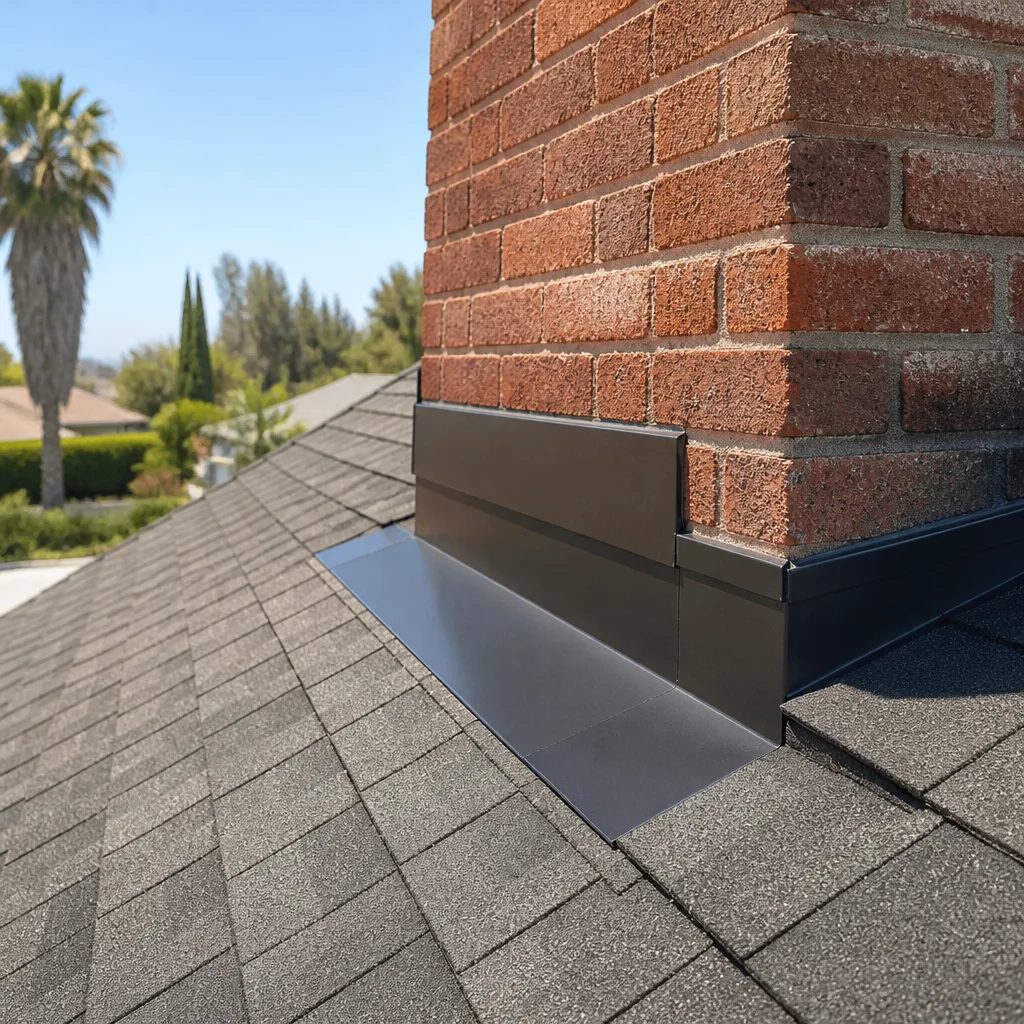
- Flashing at walls, chimneys, and skylights. Sealant dries and cracks; water gets behind the flashing and into the decking.
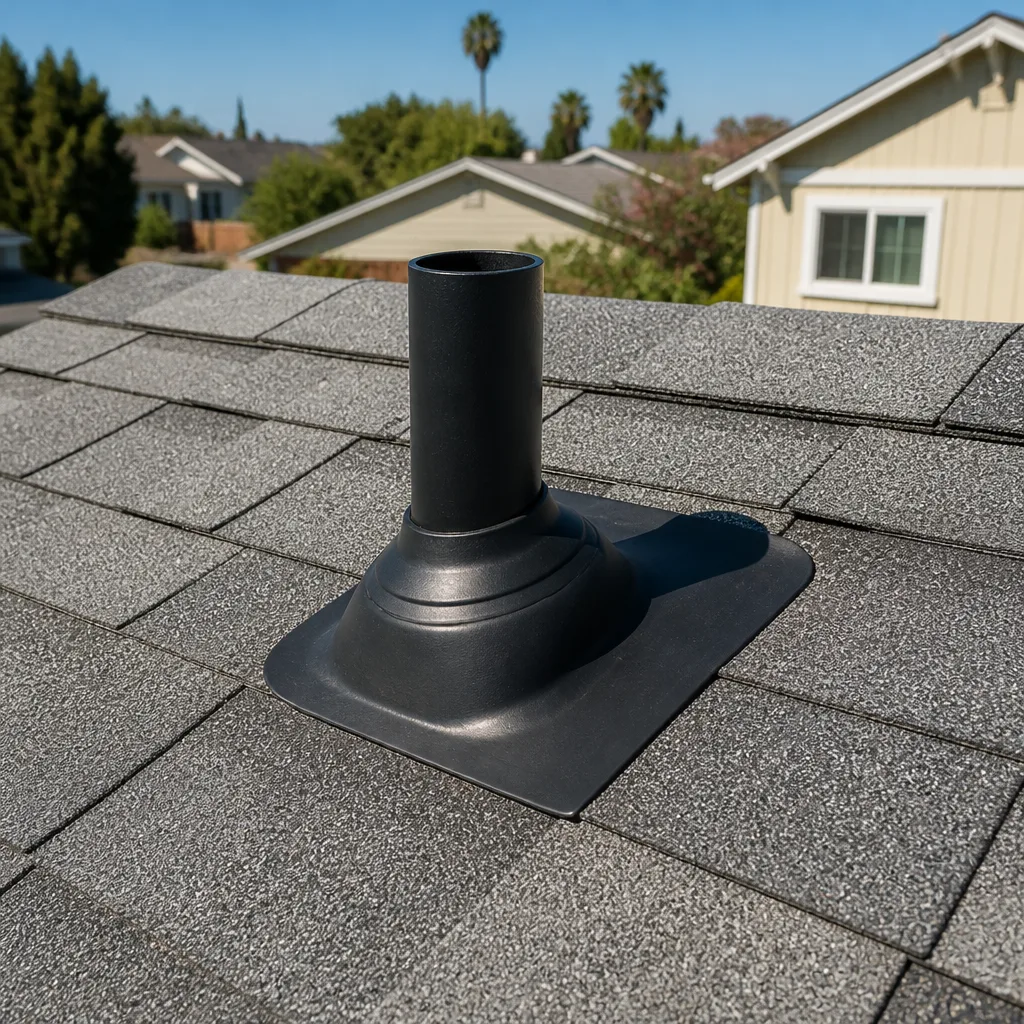
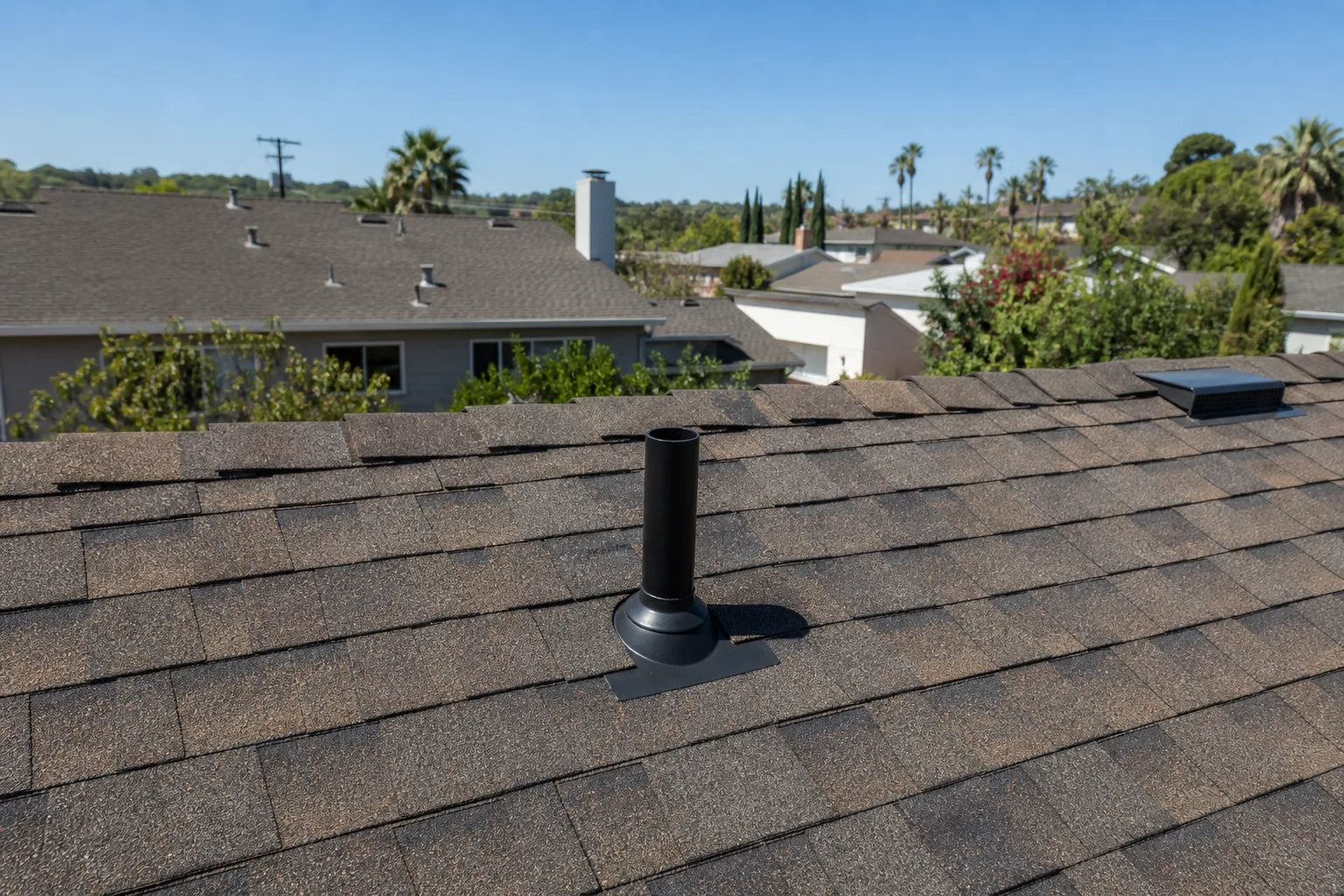
- Pipe boots and vent seals. These small rubber or plastic collars crack with UV exposure and are a common source of slow, unnoticed leaks.
- Valleys and gutters. Debris from mature trees in Elk Grove neighborhoods clogs drainage and sends water sideways under shingles.
- Attic ventilation. Poor ventilation traps heat and moisture, which can speed up deterioration and make attic-side damage harder to spot.
The point is that Elk Grove emergencies follow a pattern. They cluster around the first significant rain events of the season, and they hit roofs that were already weakened months earlier. Understanding that pattern is the foundation of everything else in this guide.
The Five Pre-Season Tasks That Decide How Your Roof Survives
The work that matters most happens before November, not during the storm. In our experience, the difference between a roof that needs a small repair in January and one that needs a full replacement comes down to preparation done in late summer and early fall. These five tasks are the highest-value things an Elk Grove homeowner can do.
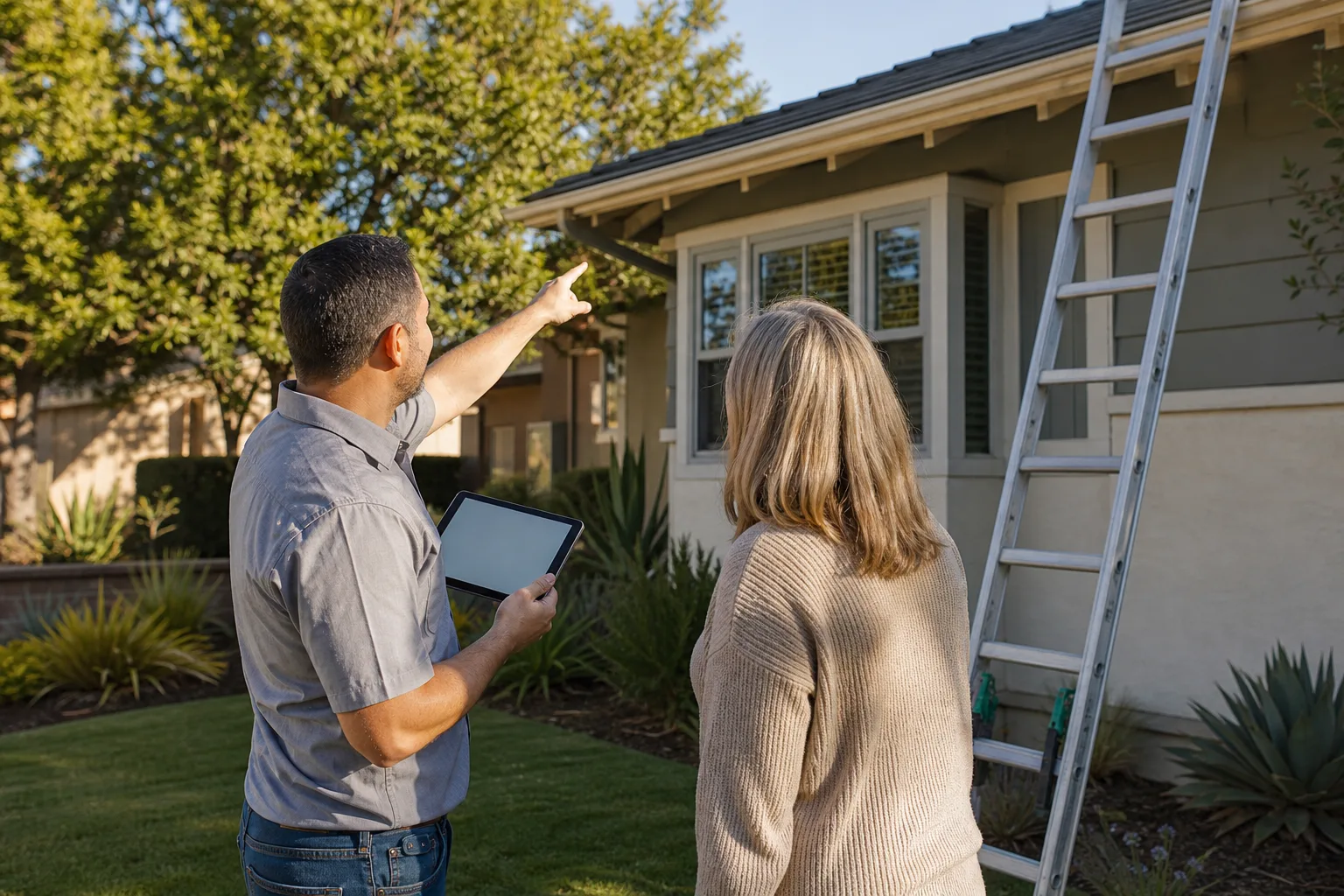
- Get a professional roof inspection. A trained eye catches lifted shingles, cracked flashing, failing pipe boots, and worn sealant before they become leak paths. Schedule it in late summer or early fall so any repairs are completed well before the rainy season. A walkaround from ground level helps, but an inspection that includes the roof surface and the attic finds what you can’t see from either one.
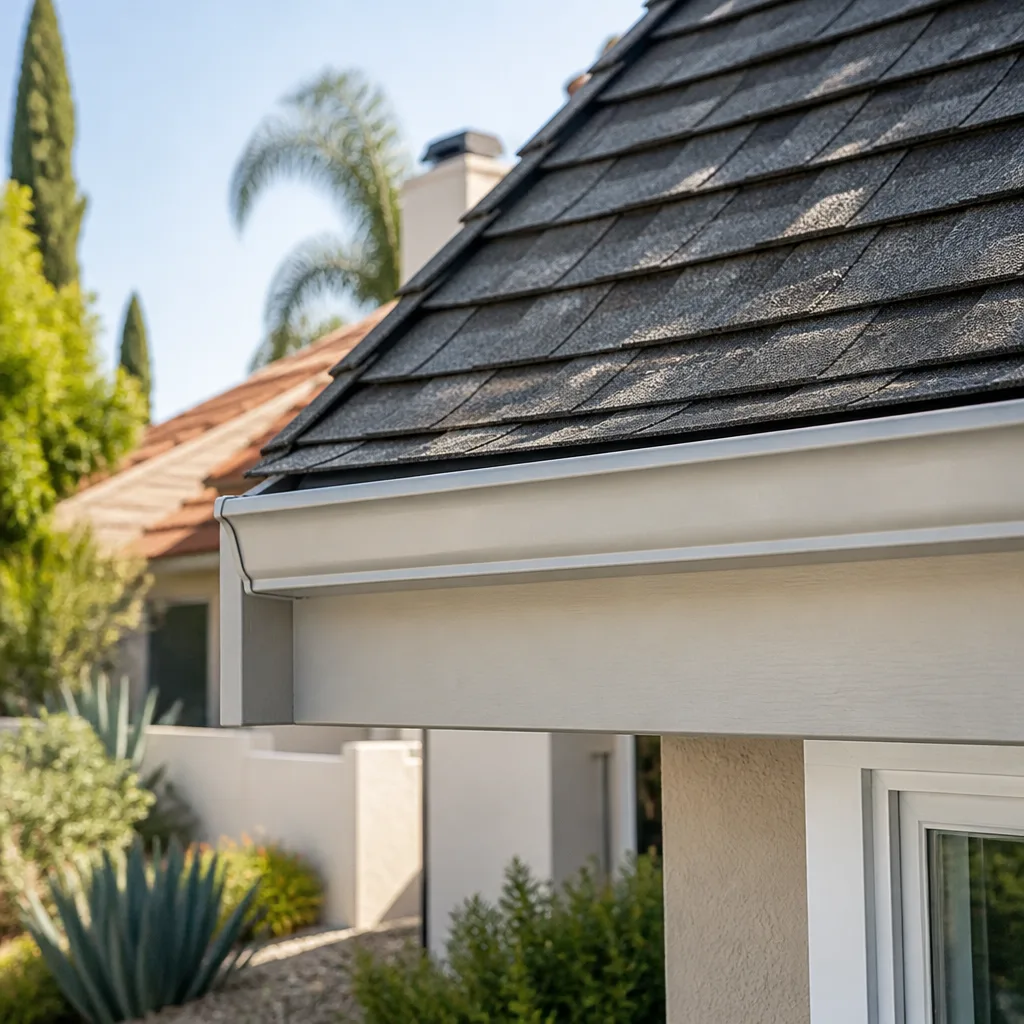
- Clear debris from valleys, gutters, and downspouts. Elk Grove yards often have large trees, and leaf drop can bury valleys and clog gutters. Water that can’t drain properly backs up under shingles at the eaves. Clear it completely, and check that downspouts actually carry water away from the foundation.
- Have flashing and seal points checked. Flashing around chimneys, skylights, wall intersections, and vents is where many leaks start. Re-sealing dried or cracked flashing before the rain is one of the cheapest things you can do.
- Confirm attic ventilation and look for existing moisture. Check the attic for staining, soft spots, or daylight showing through the roof deck. Good ventilation helps keep the roof deck dry from below. If you find moisture signs before storm season, that’s a repair, not an emergency.
- Photograph your roof’s current condition. Take dated photos from the ground and in the attic. This gives you a documented baseline so that when storm damage happens, you can show the difference between existing wear and new damage. It makes any insurance claim much cleaner.
These five steps are also a natural moment to think about the roof itself. If an inspection reveals a roof that’s near the end of its service life, planning a roof replacement before storm season is far less stressful than dealing with a failure mid-storm. If you’re building new, or adding a structure, we can help with new roof installation designed with local weather in mind.
How to Assess Storm Damage Safely After the Storm Passes
The single most important rule for post-storm assessment is this: don’t get on the roof. Wet shingles are slippery, wind-damaged edges are unstable, and a fall is a far worse outcome than a leak. You can learn a great deal about your roof’s condition from the ground and from inside the attic. That’s where to start.
From the ground, look up and around after a storm:
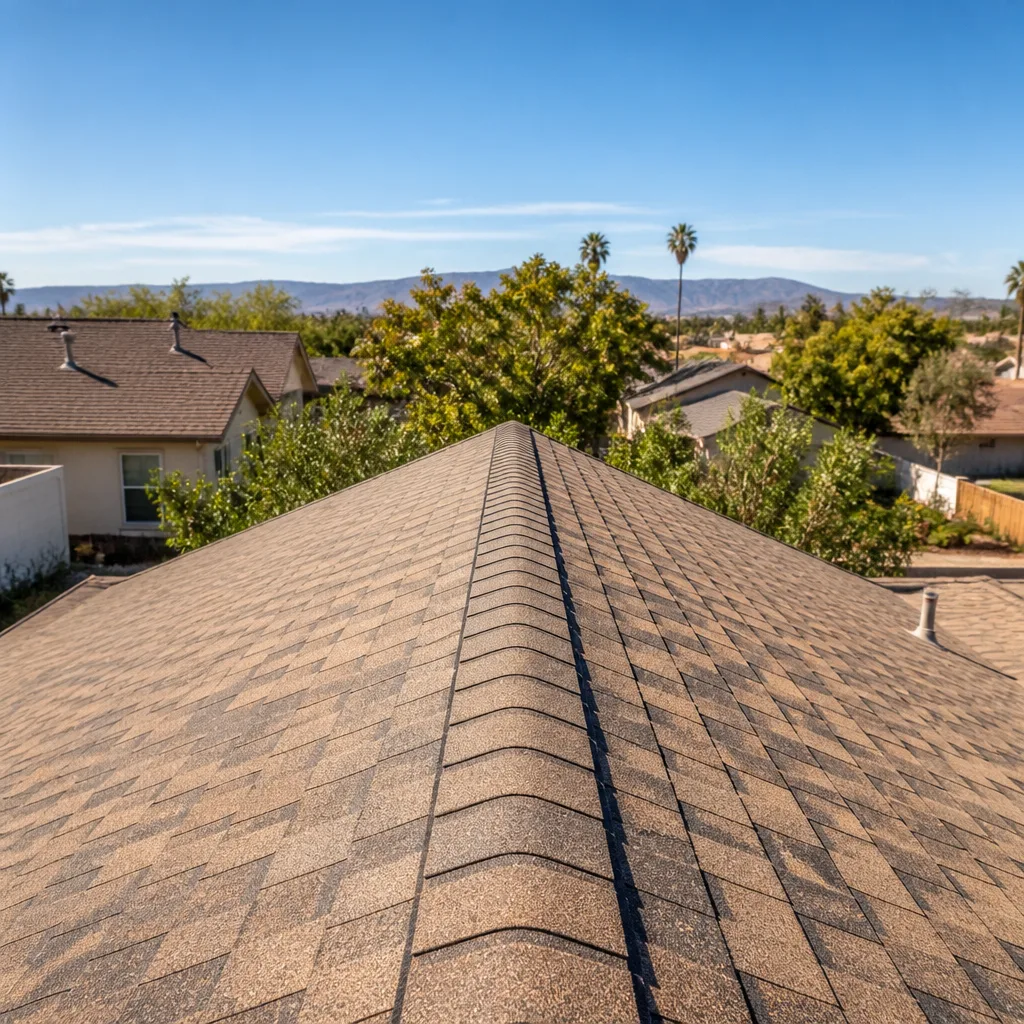
- Missing, lifted, or curling shingles. Scan the roof planes from multiple angles. Binoculars help on two-story Elk Grove homes.
- Granules in gutters and at downspout outlets. A heavy concentration of granules after a storm suggests shingle wear or damage.
- Shingle pieces, nails, or debris in the yard. This tells you wind lifted material somewhere.
- Bent or lifted flashing, damaged vents, or displaced pipe boots. Look closely at chimneys, skylights, and roof penetrations.
- Sagging along the roofline or visible dips. This can signal decking or structural issues and calls for a professional look.
- Gutter damage. Gutter sections pulling away from the fascia suggest the roof edge took a hit too.
Then go inside, into the attic if you can access it safely:
- Water staining on rafters, decking, or insulation. Fresh staining is a clear sign of an active or recent leak.
- Daylight coming through the roof deck. If you can see outside through the roof, the roof is open to water.
- Damp insulation or a musty smell. Both point to moisture that has already entered.
- Soft or spongy spots in the ceiling below. This tells you water has reached the drywall.
Inside the house, watch for new ceiling stains, bubbling or flaking paint, and drips. Any of those put the issue beyond a watch-and-see situation. This is also the point where it helps to know your material. If your home uses shingle roofing, wind and granule damage are the things to look for; tile and metal have different failure modes and should be assessed with those in mind. If you’re unsure what you’re looking at, stop and call a professional rather than climb up for a closer look.
Emergency Tarping: When It Helps and When It Makes Things Worse
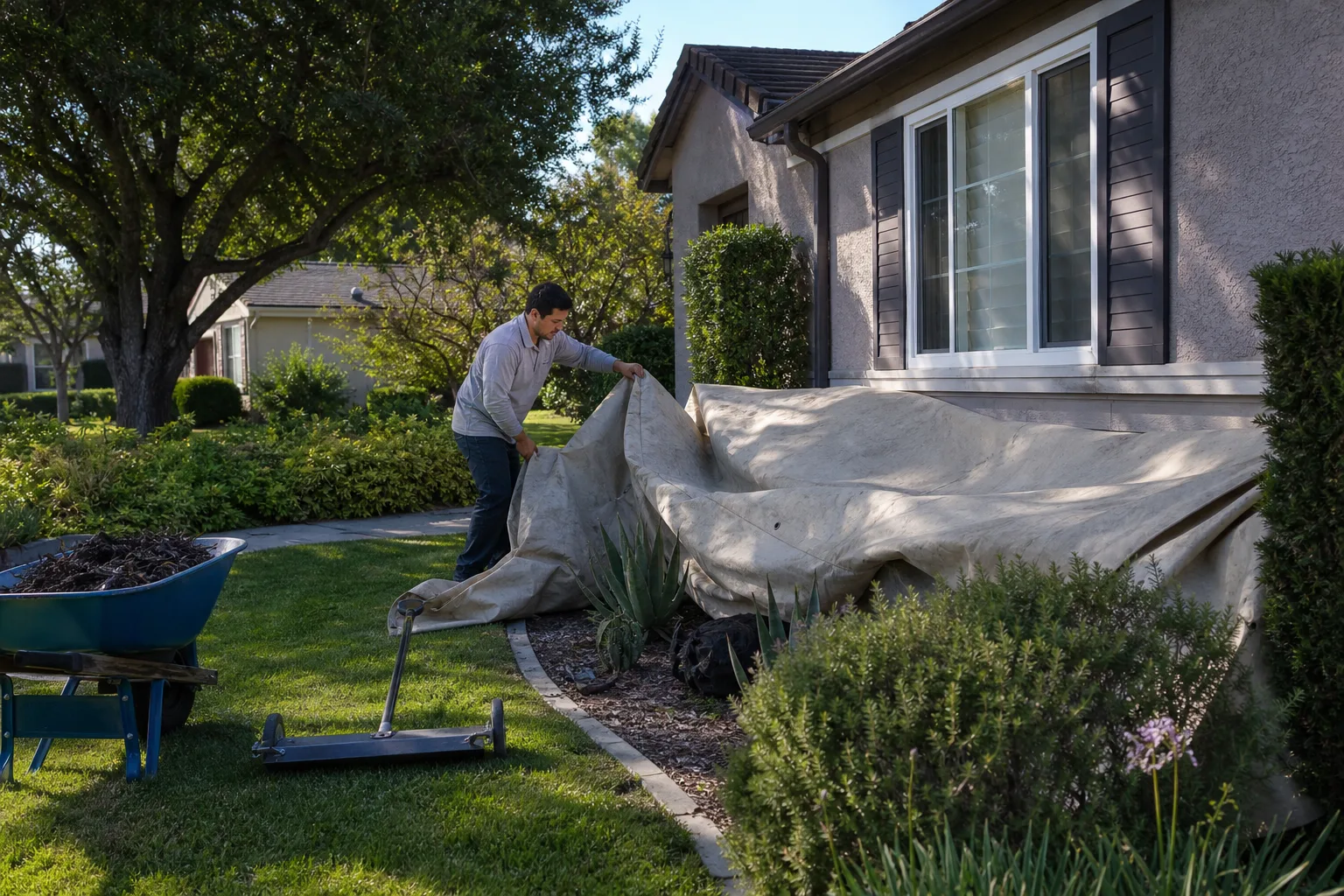
Emergency tarping is a temporary measure, not a repair. A properly installed tarp can keep water out of an active leak for a limited time while you arrange a permanent fix. A badly installed tarp can trap water, damage shingles further, and create new problems. The difference between the two is usually how it’s done, not whether it’s done.
Tarping makes sense when there’s an active leak or a localized area open to the weather after a storm, and a permanent repair can’t happen right away. It does not make sense as a substitute for repair when the leak is over a larger area or the roof decking is compromised. Flooding the whole roof with a tarp because of one leaky flashing point is overkill and often causes more harm than good.
What a proper temporary installation involves:
- Attaching the tarp without damaging good shingles. Fasteners placed carelessly can punch new holes. A proper install secures the tarp to the structure, typically at the eaves or fascia, not through good roofing material.
- Directing water away from the house. The tarp must drain toward the ground or into a gutter, not pool water against the wall or into the soffit.
- Leaving the underlying roofing material intact. Aggressive removal of shingles to install a tarp is not a temporary measure; it’s beginning a repair job.
- Setting a timeline for the real repair. A tarp is meant to last a short time. It’s a bridge to a permanent fix, and the sooner that fix happens, the less risk the tarp itself introduces.
One caution about temporary patches in Elk Grove: homes here take heavy sun, and any sealant or patch used as a temporary fix may cure and harden before you get back to schedule the permanent repair. That can make the eventual fix more complicated. Tarping is a stopgap. Repair is the goal. The tarp’s job is to protect the house until a trained technician can make the permanent fix, and that’s something we’d rather see installed correctly than improvised.
How to Document Storm Damage for Your Insurance Claim
Insurance claims for storm damage are decided on evidence. The homeowner who documents thoroughly, early, and consistently tends to have a smoother claim than one who reports a leak with a single phone photo. Adjusters are looking for proof of sudden, specific storm-related damage rather than gradual wear, and your documentation needs to make that distinction clear.
Here’s a photography and documentation sequence that works:
- Photograph from the ground first. Wide shots of each roof plane, then closer shots of any suspected damage. Include the whole house and a recognizable feature so the photos are easy to orient.
- Photograph debris and the yard. Fallen shingles, granules in gutters, and windblown material tell the story of what happened at your home during the storm.
- Photograph interior damage. Ceiling stains, drips, and attic moisture should be photographed before any cleanup. Note the date and time you found each one.
- Keep a written damage log. List what you observed, when you observed it, and what you did about it. A simple dated list is enough.
- Document the baseline. If you did the pre-season photo step, keep those photos handy. They show what was existing wear versus new storm damage.
- Get a professional damage assessment in writing. A written inspection report that identifies specific damage points gives your claim a technical foundation an adjuster can use.
Adjusters typically pay particular attention to the difference between wear and tear and storm damage, the specific cause of the damage, and whether the repair scope matches what the damage actually requires. Claims in Sacramento County also tend to move faster when documentation is thorough from the start. If it’s unclear whether damage is storm-related, an inspection report can help clarify it. Ready to get an assessment? Call (279) 333-8281 for a free estimate on any storm-related repair.
Vetting a Roofing Contractor Under Time Pressure
Storm damage creates urgency, and urgency is where storm chasers make their money. They know homeowners are under pressure, sometimes property-damaged, and often deciding quickly. Vetting a contractor fast is actually not difficult; it just requires knowing what to check before you sign anything.
Quick verification checklist:
- Confirm the contractor is licensed and insured for roofing work as their state requires. Ask for proof and check it. A legitimate roofing contractor can produce this quickly, and any hesitation is a signal.
- Get a written estimate with line items. You should be able to see exactly what will be done, what materials will be used, and what the total cost is. Be wary of a bid that’s verbal or a single lump sum with no detail.
- Ask for a business address and phone number you can verify. Storm chasers often work with out-of-area phone numbers and no local presence, and they may be gone the moment the next storm system moves through.
- Ask whether they pull permits. Roof repair and replacement work in most cases requires a permit from your city or county. A contractor who explains how they handle permits is being straight with you.
- Get it in writing that the price in the estimate is the price you’ll pay. No change orders after work starts, no surprise line items.
- Ask about warranty. Roofing materials from major manufacturers often carry transferable product warranties, and the installation warranty matters too. Confirm both in writing.
- Watch for high-pressure sales. Door-to-door offers, “sign today only” pricing, and pressure to file a claim before you’ve had time to think are all red flags. Genuine roofing contractors give you room to make a decision.
Good contractors understand that a homeowner facing storm damage needs a clear plan, not a sales pitch. If an offer feels like a hurry, that’s because it is designed to be. Take the extra hour and check. And when you contact an independent local professional, ask the same questions above. The ones who can answer them without hesitation are the ones worth trusting.
Material Choice and How It Affects Storm Resilience
The roof that survives Elk Grove’s wet season best is often the roof that was specified with the local climate in mind from the start. Asphalt shingle remains the most common choice in the area for good reasons, but material choice does affect how a roof handles sun, wind, and sustained rain.
We install three major roofing systems: architectural shingle, tile, and metal. Here’s how each tends to behave in local conditions:
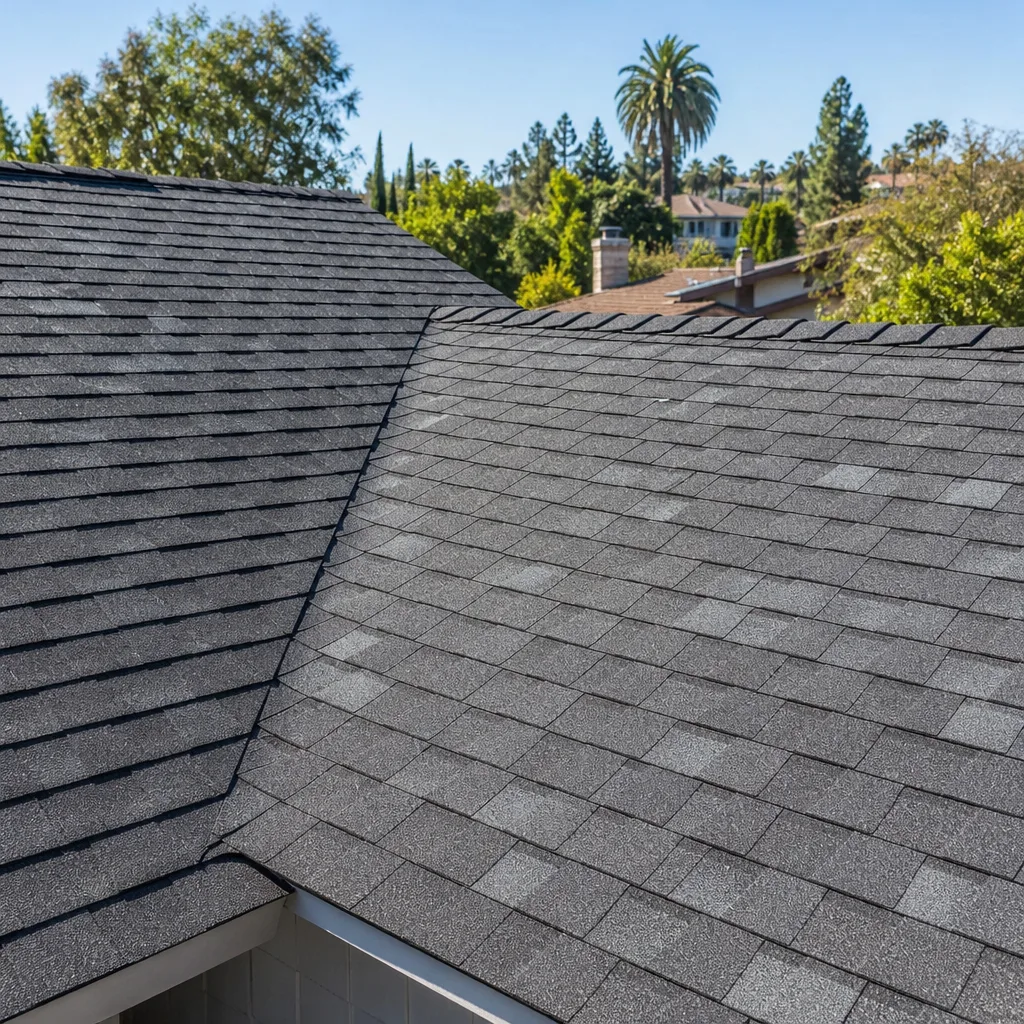
- Architectural shingle. The standard for most Elk Grove homes. Good shingles from recognized manufacturers like GAF or CertainTeed offer solid protection and are straightforward to repair or replace. The key is quality installation and prompt repair when shingle damage appears.
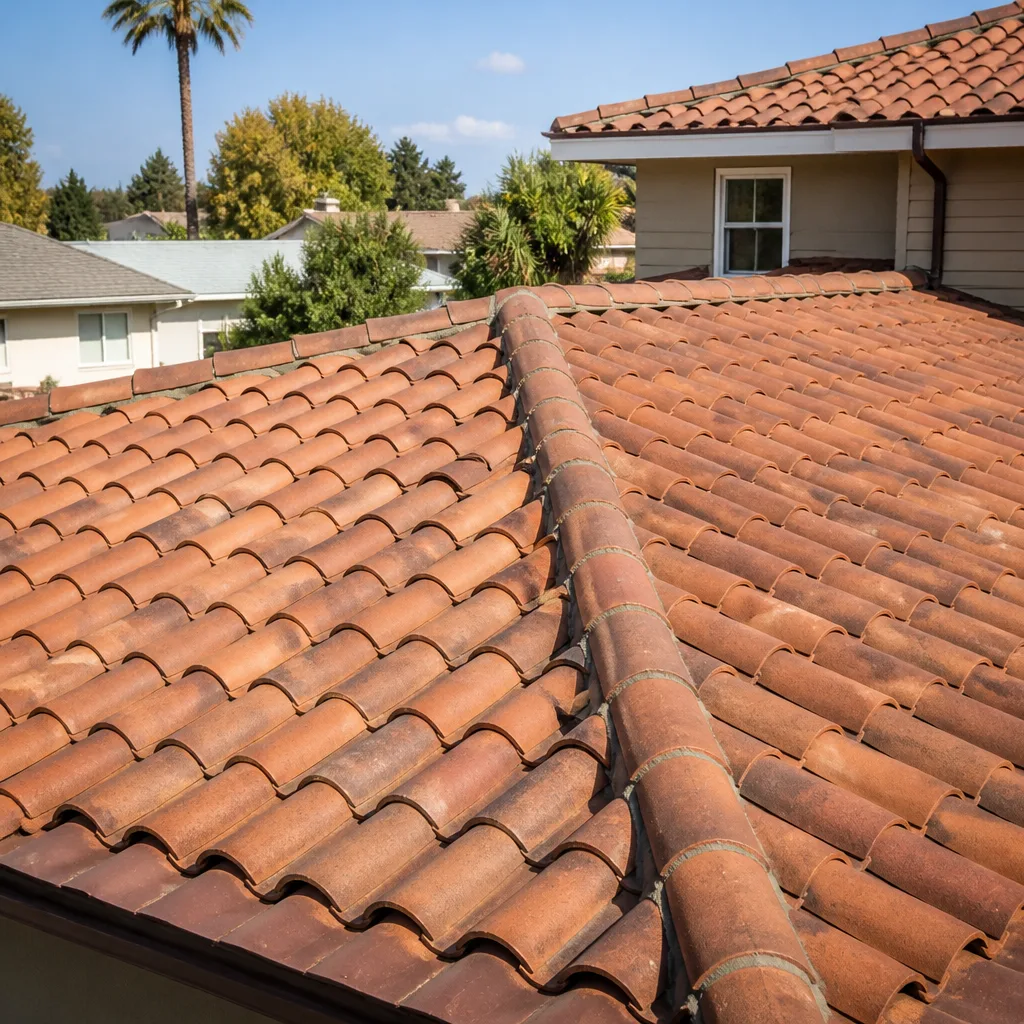
- Tile roofing. Tile handles heat and sun well and is durable, but it also needs correct underlayment and careful installation to manage water in valleys and around penetrations. Tile repairs are different from shingle repairs and should be handled by someone experienced with tile.
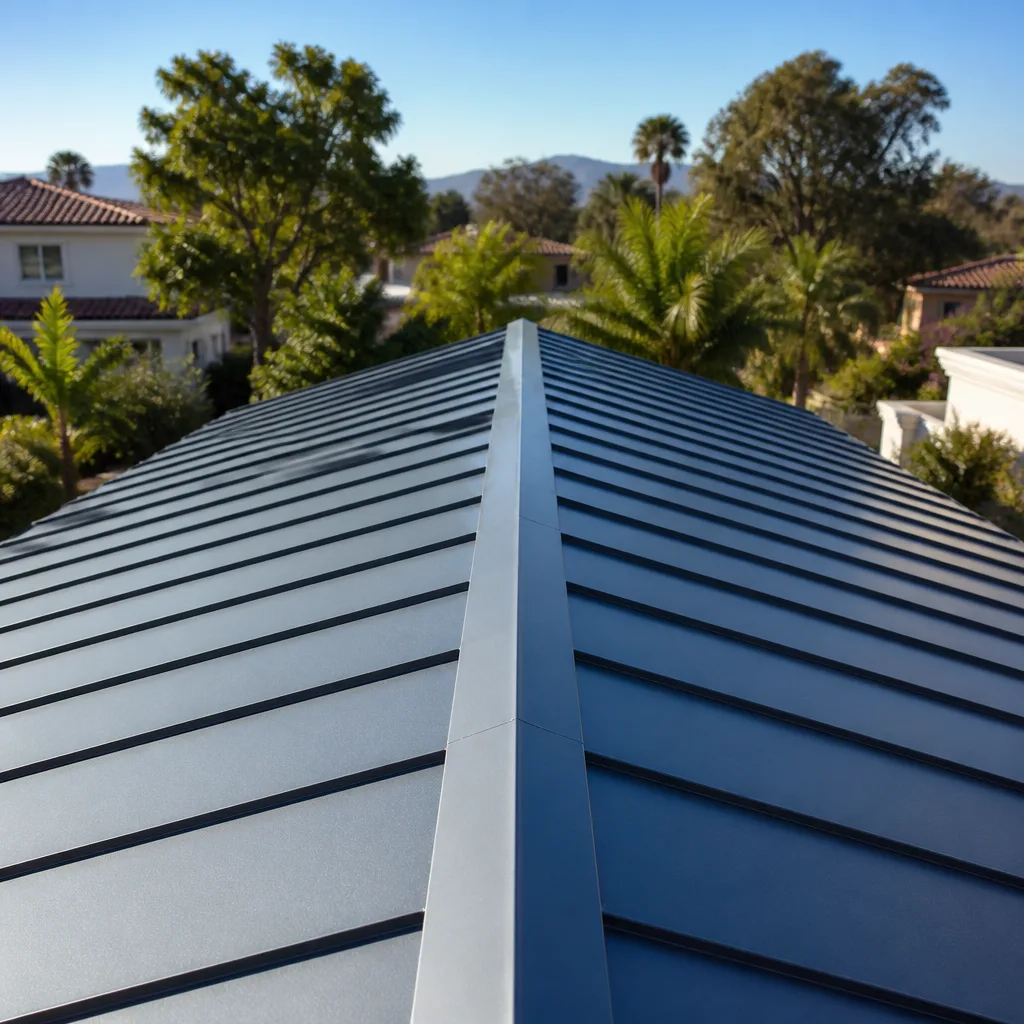
- Metal roofing. Metal handles sun, wind, and sustained rain well when installed with proper fasteners, flashing, and sealant at penetrations. It also tends to have a long lifespan. Quality products from brands like Boral can stand up to local weather when properly installed.
We keep seven manufacturer lines available – GAF, CertainTeed, Owens Corning, IKO, Atlas, Tamko, and Boral – so choosing the right roof for your home isn’t decided by what a single supplier happens to have. That matters for storm resilience, because the right material for your pitch, sun exposure, and budget is decided by your home, not by a supply contract. At Roofing Elk Grove Pros, we install all three systems and handle both new construction installations and full tear-off replacements, so the advice you get isn’t limited by what we happen to specialize in.
Whatever the material, the pre-season inspection and prompt repair matter more than the material itself. A well-installed shingle roof in good repair outperforms a neglected tile roof every time a storm hits.
Common Mistakes to Avoid
Over the years we’ve seen the same avoidable mistakes turn small storm issues into expensive ones. Here are the ones that come up most often.
- Waiting until it rains to think about the roof. The inspection that finds the failing pipe boot is much cheaper than the ceiling repair that follows the leak. Schedule the check in the dry months and you’ll spend far less in the wet ones.
- Climbing up for a look after the storm. Wet roofs are dangerous. Ground-level and attic-level assessment is enough for a first check, and it will tell you whether you need to call a professional. If it does, make that call. Don’t get on the roof.
- Using a tarp as a permanent fix. A tarp is a bridge. If it’s still there months later, it’s no longer doing its job, and it may be causing new problems under the surface.
- Documenting damage after cleanup starts. Photograph and note everything before you remove debris or dry anything out. Once the evidence is gone, the claim gets harder.
- Hiring the first contractor who knocks. Storm chasers appear after every major storm system. Check license and insurance, get a written itemized estimate, and confirm they pull permits before you let anyone on your roof.
- Skipping the permit. Most roof repair and replacement work requires a permit through your city or county. A contractor who skips it can leave you with an unpermitted job that poses a problem when you sell the home or file a future claim.
- Ignoring attic warning signs. Staining or daylight in the attic after a storm is real damage, not a small thing to watch. Address it quickly, even if no water is dripping yet.
See the difference
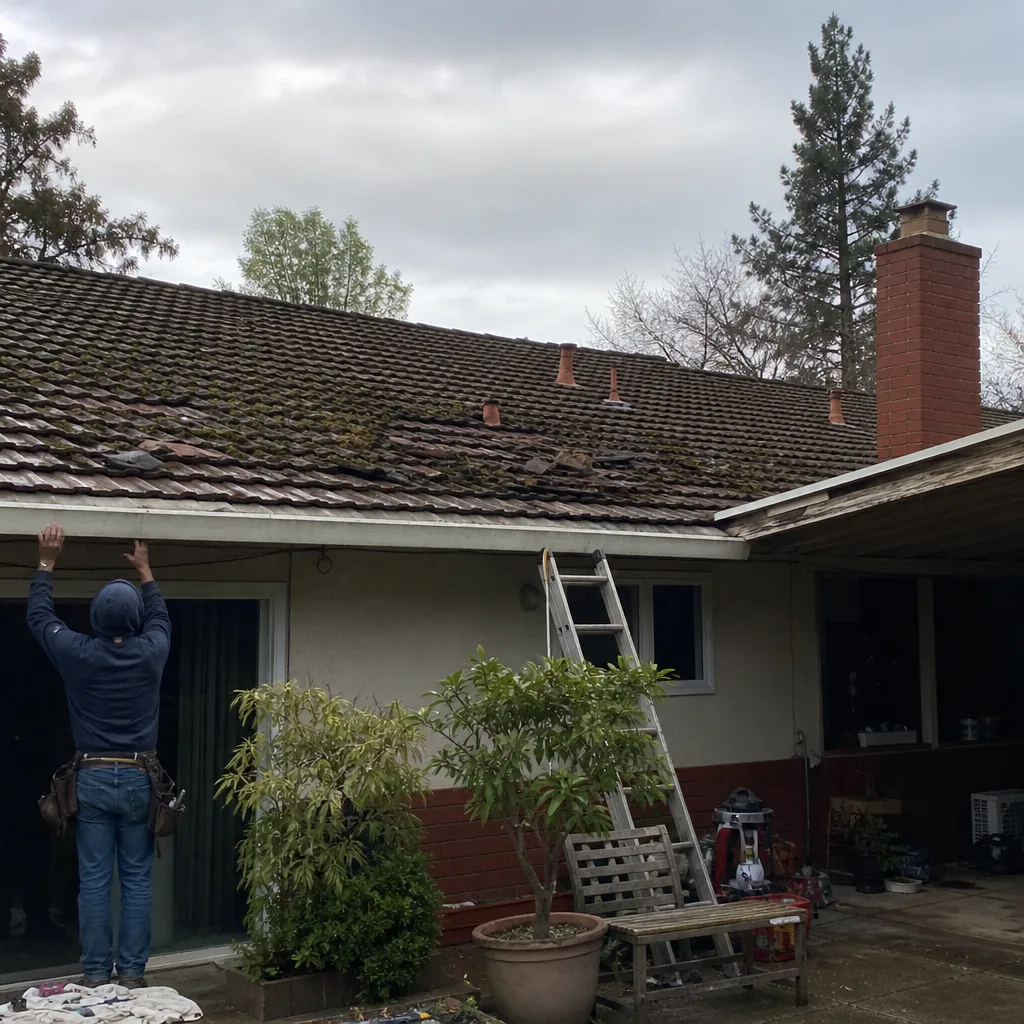 Before
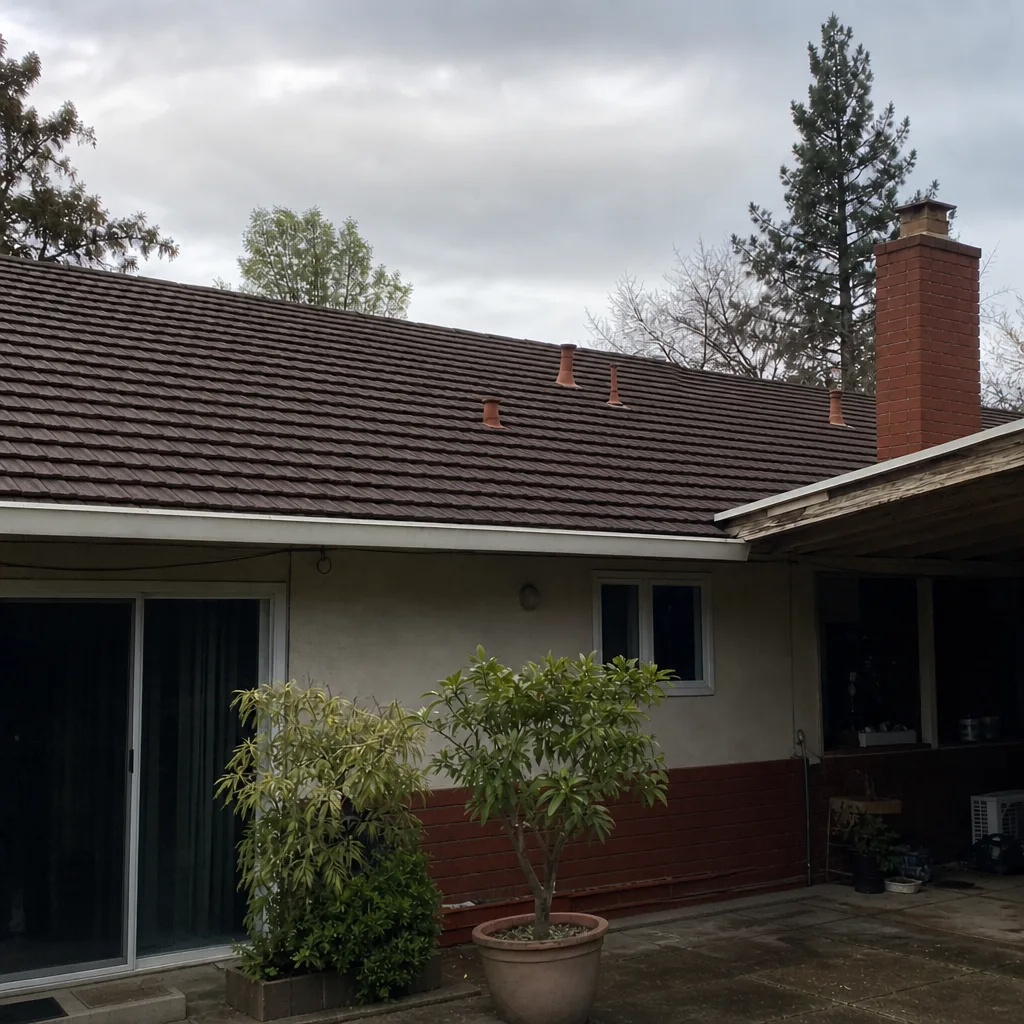 After
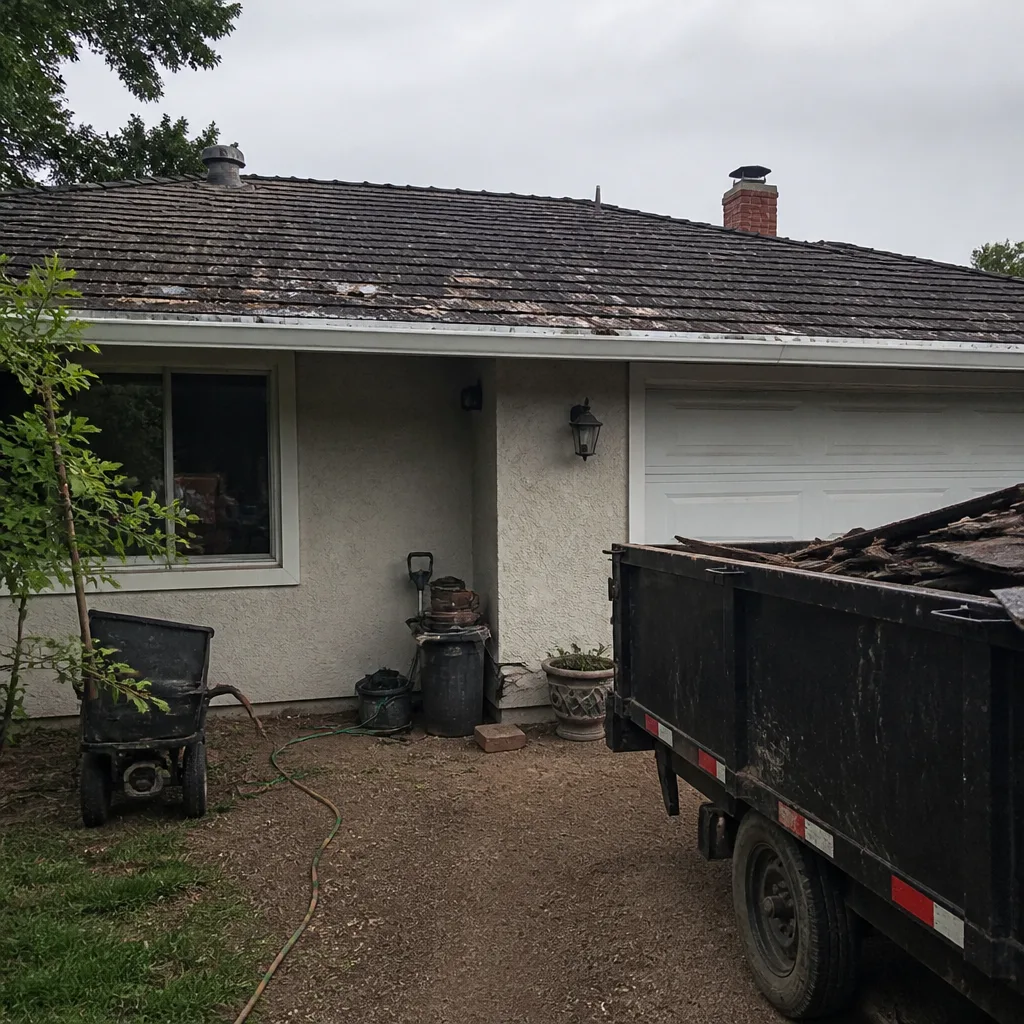 Before
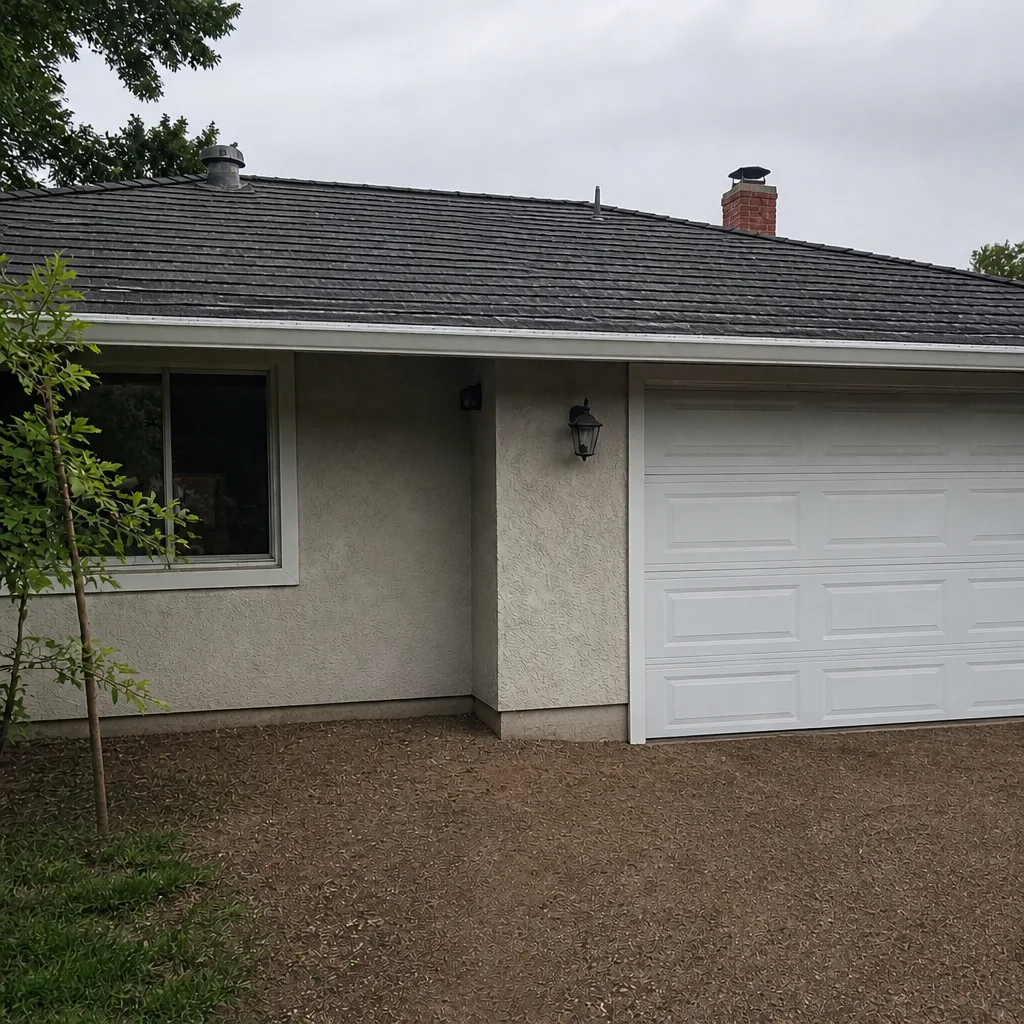 After
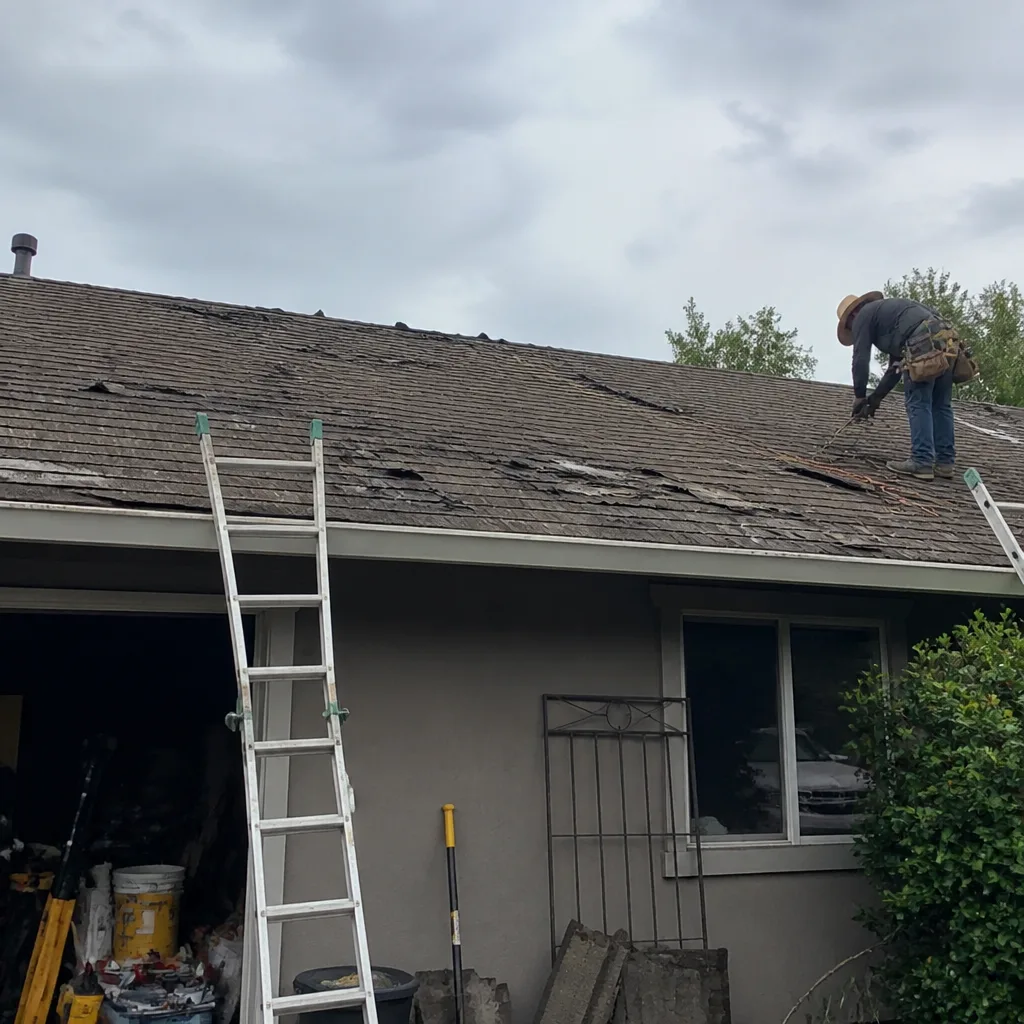 Before
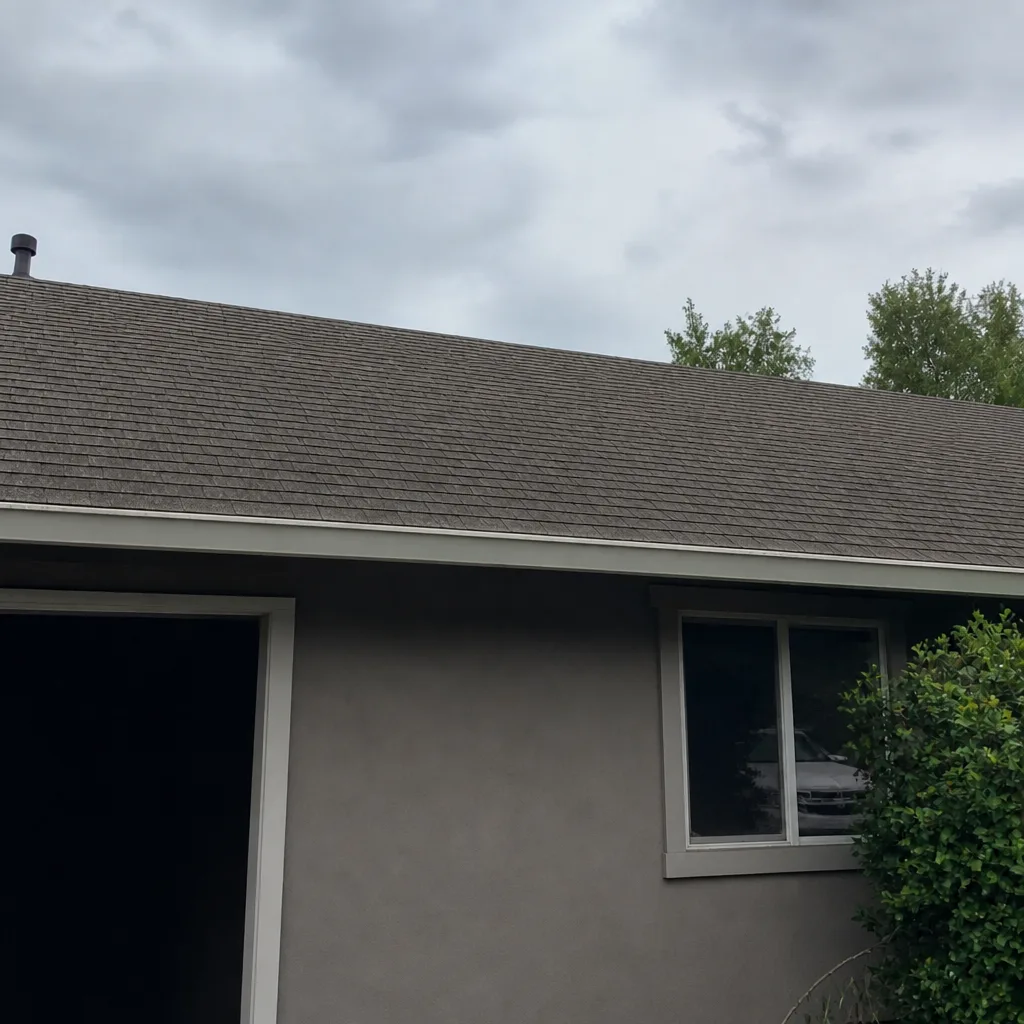 After
When to Call a Professional
Call a professional if any of these are true: you have an active leak or ceiling stain after a storm, you suspect missing, lifted, or damaged shingles you can’t see safely from the ground, you have attic moisture, you smell a damp or musty odor you can’t explain, or your roof has taken visible wind or debris damage. Call, too, if your roof is older and you simply don’t know its condition; an inspection answers that better than guesswork. For a roof emergency in Elk Grove, don’t wait to see whether it gets worse. Roofing Elk Grove Pros offers free estimates in Elk Grove – call (279) 333-8281. We answer 24/7, with fast dispatch from 7am to 7pm, Sunday through Friday. We’re closed on Saturday. Our technicians have up to 12 years of experience and install shingle, tile, and metal systems.
Frequently Asked Questions
Don’t get on the roof. Do a ground-level look for missing shingles, debris, and damaged flashing, then check the attic for daylight, stains, and damp spots. Photograph what you find and call a professional for an assessment. If there’s active water entering, place a bucket and call right away. Call (279) 333-8281 for a free estimate – estimates are free.
It depends on the scope, the material, and how much damage there is. Storm damage often involves localized repair – flashing, shingle replacement, or a small section – which typically costs less than a full replacement. The written estimate sets the final price, with line items and no change-order surprises. We don’t quote fixed numbers over the phone, because we’d rather quote you accurately after an inspection. Call (279) 333-8281 and we’ll discuss the range for your situation.
No. A tarp is a temporary measure to keep water out while you arrange a permanent repair, and it should be installed correctly so it doesn’t do more harm than good. It’s a stopgap, not a fix. Call (279) 333-8281 and we’ll tell you whether tarping is appropriate for your roof and what the permanent repair looks like.
Wear and tear is gradual – granule loss, weathered seals, drying flashing – while storm damage tends to be sudden: missing shingles after a specific storm, fresh attic staining, or impact damage from debris. Dated photos from before and after the storm help an adjuster make that distinction. A written professional assessment also clarifies it. Call (279) 333-8281 and we’ll assess your roof in person.
Coverage depends on your policy and the type of damage, so check your plan and talk to your insurer about what’s covered. Our role is to provide a clear, documented assessment so you have the technical evidence your claim needs. We can work with your insurer and help you understand what was damaged. Call (279) 333-8281 to schedule a free assessment.
Storm chasers show up after major storms, often with out-of-area phone numbers, high-pressure sales pitches, and offers that expire quickly. Ask for proof of licensing and insurance, get a written itemized estimate, and confirm they pull permits before any work begins. If they can’t answer those questions, walk away. Call (279) 333-8281 if you’d rather have a free estimate from a roofing-focused company that covers shingle, tile, and metal systems.
Yes, and that’s the most valuable thing you can do. A pre-season inspection in late summer or early fall identifies failing pipe boots, cracked flashing, and worn shingles before the rain arrives. Fixing them in the dry months costs less and is far calmer than fixing them mid-storm. Call (279) 333-8281 for a free estimate before the wet season starts.
The Bottom Line
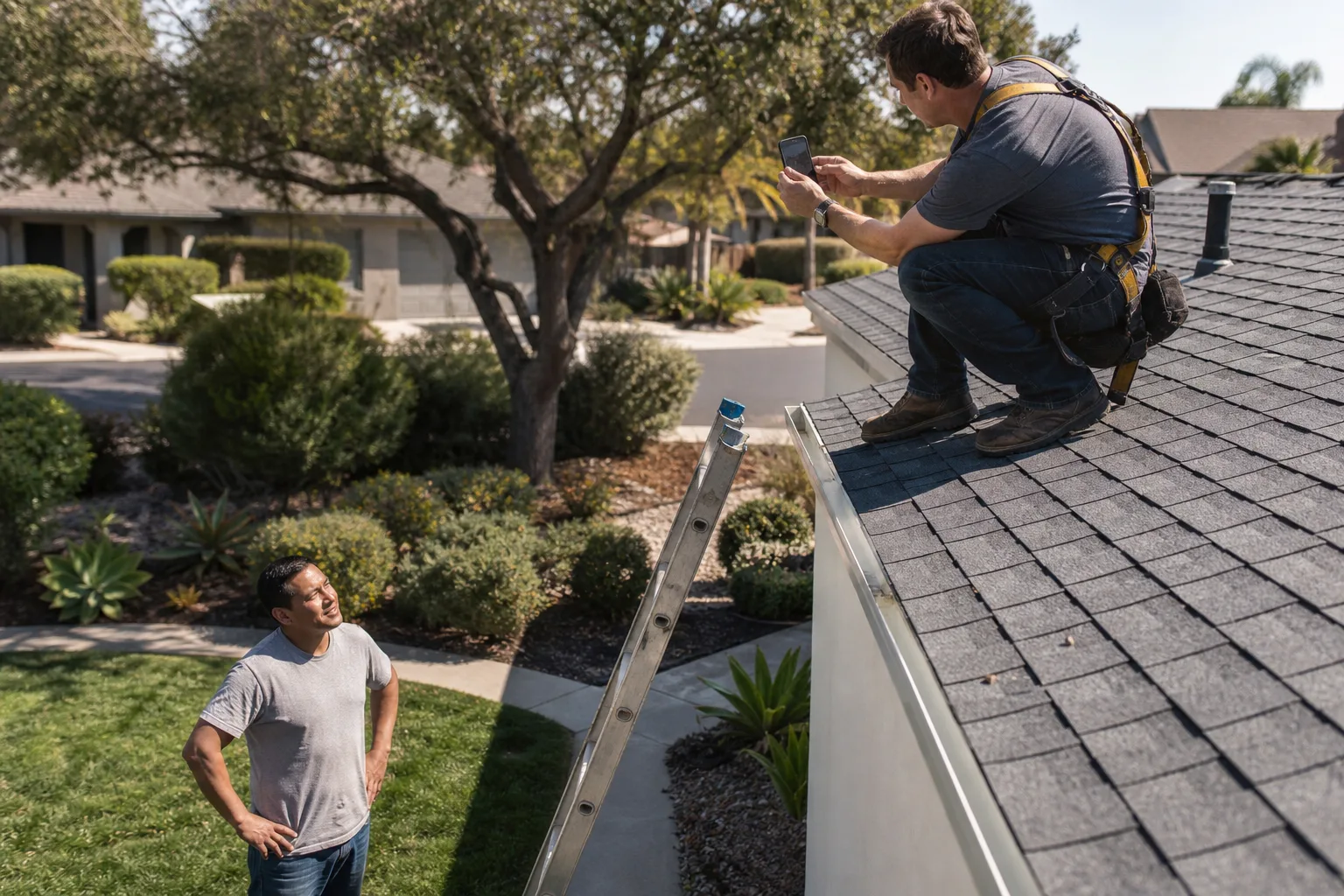
Elk Grove roof emergencies are not unpredictable. They cluster around the first sustained rain of the season, and they hit roofs that had a long dry summer to weaken and no inspection to catch it. The five pre-season tasks – inspection, debris clearing, flashing checks, attic ventilation and moisture check, and baseline photos – are simple and low-cost. Done in late summer, they are the difference between a small January repair and a large replacement in the middle of a storm. Document damage for insurance before cleanup starts. Vet contractors with a written checklist, not with a handshake and a verbal promise. Roofing Elk Grove Pros offers free estimates in Elk Grove for shingle, tile, and metal systems, and we’re happy to look at your roof before the season turns, or after. Roofing is all we do, and we do all three.
If you have a storm-damaged roof right now, or want to get ahead of the season, call (279) 333-8281 to schedule your free estimate. You’ll get a clear assessment, a written line-item quote, and a plan for what actually needs fixing. Tell us what you’re seeing and we’ll give you straight answers.
Written by the team at Roofing Elk Grove Pros.