Last updated November 25, 2026

Free roof inspection with deck photos before we talk money - GAF and Owens Corning certified installation
Roofing Warning Signs: An Elk Grove Homeowner’s Reference Guide
Most roofing warning-sign lists fail homeowners in the same way: they put a cracked shingle and water pouring through a ceiling light on the same page and treat them as equally urgent. They aren’t. Granules in your gutter are a fact you can track for a year. Water staining that spreads during a rainstorm is a fact that needs attention today. The gap between those two realities is where Elk Grove homeowners lose money, either by panicking over normal aging or by ignoring a small leak until the sheathing softens. This guide gives you a triage framework instead of a scare list. You’ll learn which signs demand a call today, which allow weeks for a planned repair, and which you simply watch over the next season. You’ll also learn how Elk Grove’s hot inland valley summers shape what roof failure actually looks like.
Quick Answer
Roofing warning signs split into three tiers. Immediate signs include interior water staining during rain, missing or displaced roofing material, visible daylight in the attic, and active leaks. Scheduled signs include widespread granule loss, granule buildup in gutters, cracking or curling shingles, and ridge mortar failure on tile roofs, all of which should be inspected within about thirty days. Monitor-only signs include mild surface granule wear, isolated moss, and a few cracked shingles that aren’t yet causing water entry. The tier tells you how fast to act, not whether the roof is fine.
Styles & brands we work with
- Architectural shingles
- Metal roofing
- Tile roofing
- GAF
- Owens Corning
- Flat & low-slope
Table of Contents
- The Three-Tier Triage System for Roof Warning Signs
- Interior Warning Signs Most Elk Grove Homeowners Dismiss
- UV Cracking on Composition Shingles Versus Normal Aging
- Roof, Flashing, or Gutter: Telling Apart Problems That Look Identical From Inside
- Warning Signs Specific to Tile Roofs in Elk Grove’s Newer Subdivisions
- How Old Is Your Roof, Really? Reading Condition Instead of a Calendar
- A Step-by-Step Annual Roof Inspection Walk-Around
- Choosing a Replacement Material After a Warning Sign Appears
The Three-Tier Triage System for Roof Warning Signs
Walk any roof in Elk Grove and you’ll find something worth noting. The useful question is not “is there a defect?” but “how fast does this defect need a response?” Here is the framework we use.
Tier 1: Immediate (call today)
These are conditions where water is getting in, or where the roof’s ability to shed water is compromised right now.
- Water staining, discoloration, or visible dripping on ceilings or walls during rain
- Missing, torn, or displaced shingles, panels, or tiles
- Daylight visible through the roof deck in the attic
- A sagging roofline or visible deflection in the deck
- Ceiling bulging or active dripping after a storm
Tier 1 is where the term “emergency” is fair. That said, roof repair in these cases is not a call-out fee game. The estimate is free and the price is set per job by the written estimate you receive. Call (279) 333-8281. We answer 24/7. Fast dispatch from 7am to 7pm, Sunday through Friday.
Tier 2: Scheduled (within about thirty days)
These are signs the roof is losing performance but isn’t leaking. They warrant a scheduled inspection and a written plan.
- Heavy granule loss visible in gutters and at downspout outlets
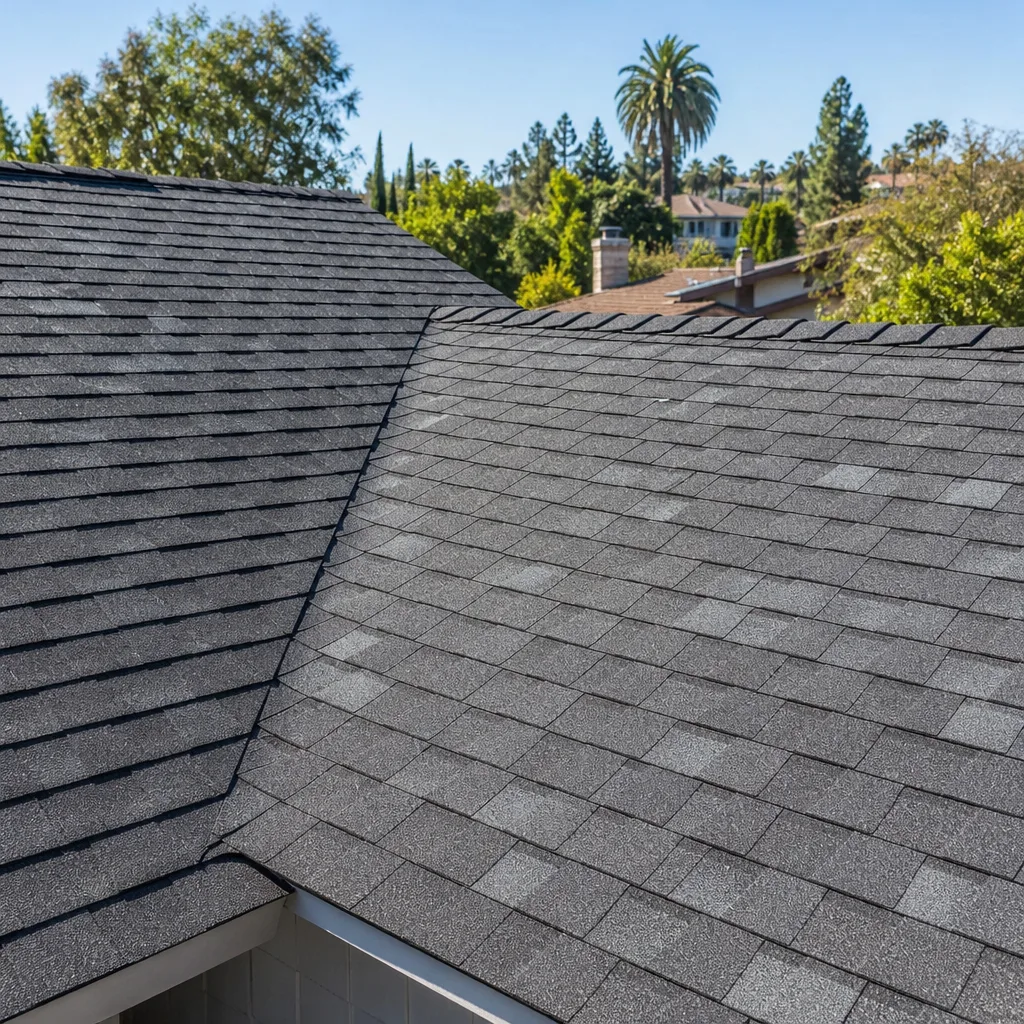
- Shingles that are curling, cupping, or cracking across several courses
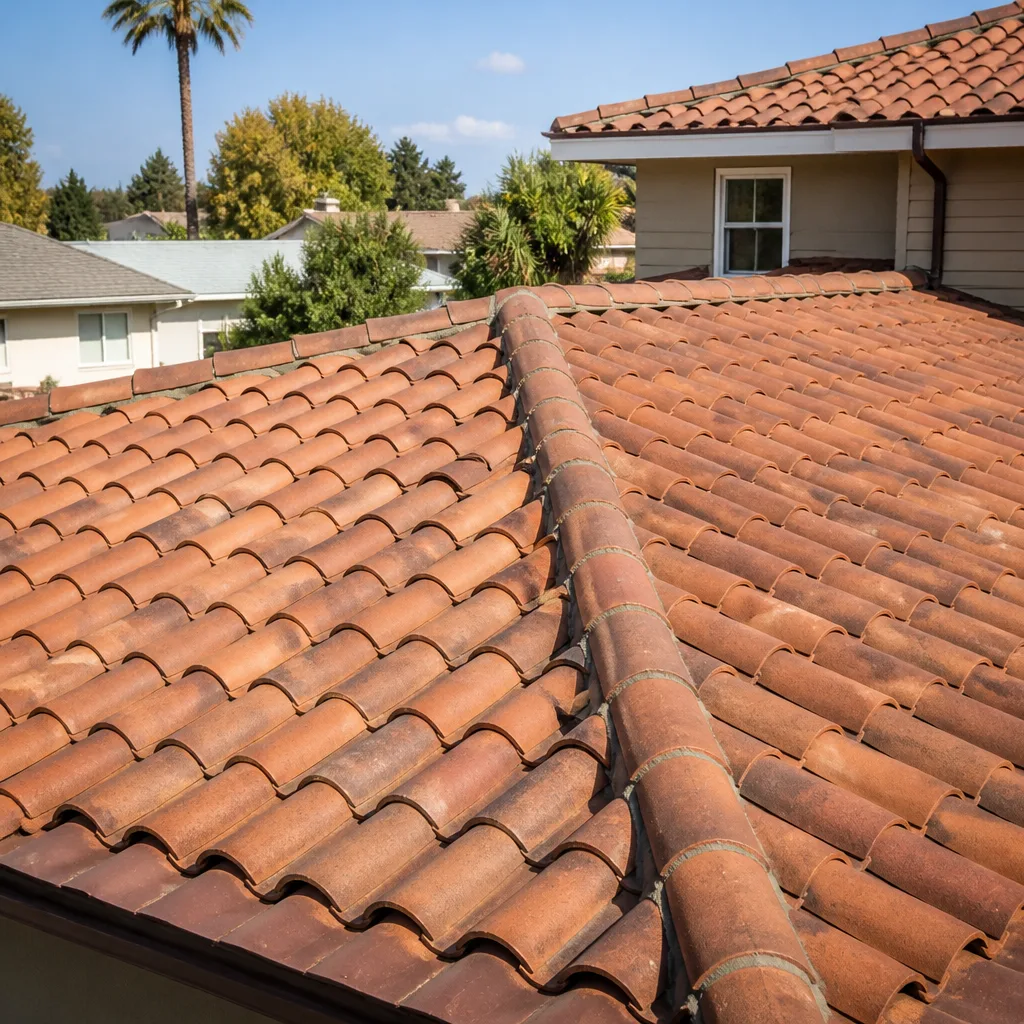
- Loose or cracked mortar at tile hips and ridges
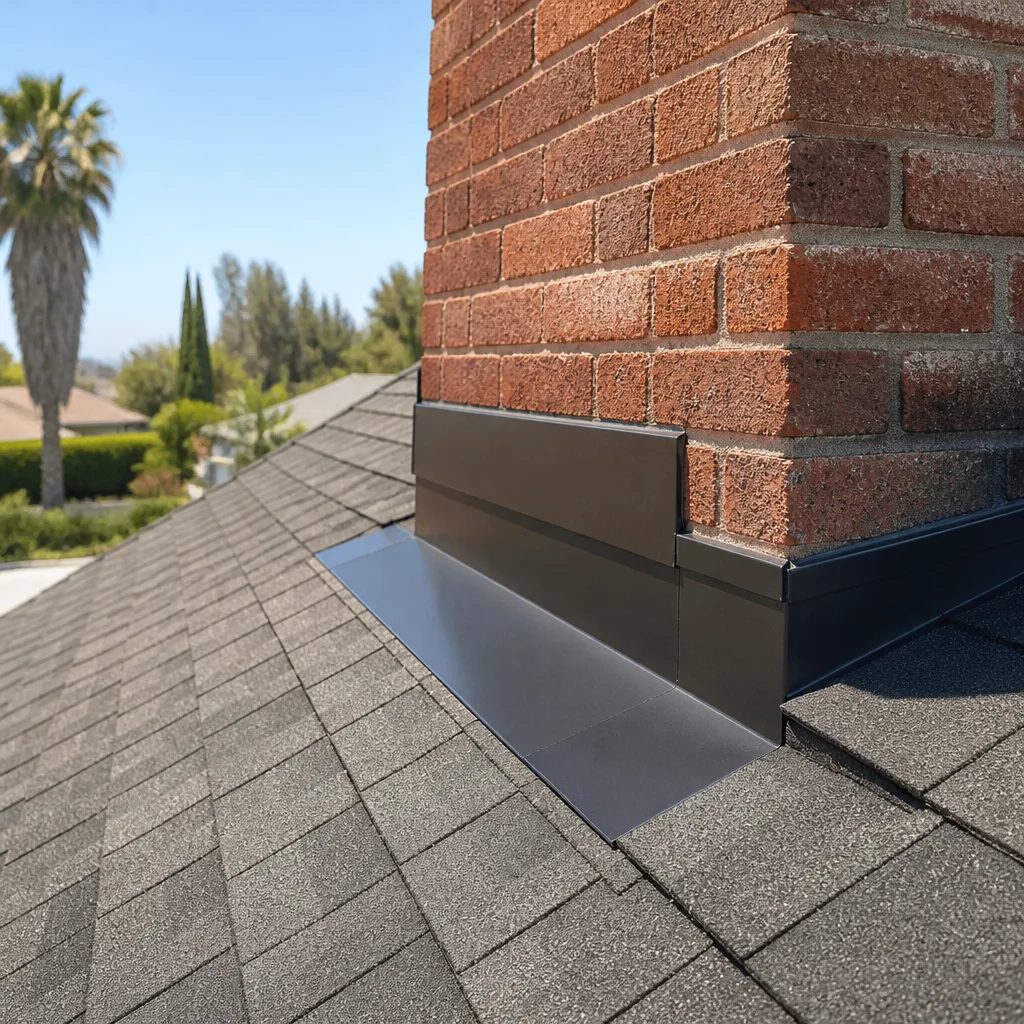
- Rusted or failing flashings around chimneys, vents, and skylights
- Repeated nail-pops or a popping sound during temperature swings
Tier 3: Monitor (track over the season)
These are the “keep a record” conditions. Photograph them every few months and check whether they worsen after summer.
- Light surface granule wear on slopes that don’t collect water
- Isolated moss or algae streaking
- A small number of cracked shingles not near a valley or penetration
Tier 3 is not a “do nothing” tier. It’s a “watch and document” tier. If a Tier 3 item crosses into Tier 2 during the next hot season, you’ll have a photographic record showing the progression, which makes the conversation about whether you need a repair versus a roof replacement much clearer.
Interior Warning Signs Most Elk Grove Homeowners Dismiss
Homeowners in Elk Grove tend to look up. The problems that matter most are the ones they see in the attic and inside the living space.
Attic condensation patterns
The Sacramento Valley’s temperature swings are the primary driver here. Attics heat to extreme highs on summer afternoons and cool substantially at night. Combined with the seasonal shift from dry summer to wet winter, that swing produces condensation on the underside of the roof deck if attic ventilation is insufficient or if warm air from the living space is reaching the attic. The tell is dark staining or dampness on the underside of the sheathing, especially on the north-facing slope, and it looks a lot like a leak. It isn’t always one. Poor ventilation doesn’t put water inside the roof system from the sky; it deposits moisture from inside. If you find it, call an inspector. If you mistake it for a leak and pay for a “leak repair,” you paid for the wrong fix.
Staining that appears after rain
Ceiling stains that show up or grow during a rainstorm are almost always water entry from above: failed flashing, a compromised shingle course, or a valley that isn’t shedding properly. Stains that appear in dry weather, especially near exterior walls, are more often condensation or a plumbing or venting issue. Note the timing. It tells the inspector where to look.
What’s easy to miss
- Peeling paint on the underside of a soffit, which can be a sign of vented moisture
- Rust on nails protruding through the sheathing in the attic, which means the deck has been wet and is drying repeatedly
- A musty smell in the attic that doesn’t correspond to a visible stain
- Light fixture fixtures in ceilings with discoloration around the trim ring
None of these is a “call in a panic” sign on its own. All of them are reasons to schedule an inspection in the next month if you can’t identify the source. Attic access makes this list short work for a trained technician. Our technicians have up to 12 years of experience reading these patterns and distinguishing condensation from active leaks.
UV Cracking on Composition Shingles Versus Normal Aging
In a place with an Elk Grove summer, sun is the primary force acting on a composition shingle roof. Distinguishing between “this roof is doing what composition roofs do” and “this roof is failing under UV stress” matters. If you can’t tell them apart, you’ll either replace too early or wait too long.
Normal aging
- Surface granules gradually thin out, most visibly on south and west slopes
- A slight roughening of the shingle surface with no cracking pattern
- Occasional granule shedding during rain, moderate in volume
- Shingles retain their shape and lie flat
UV cracking
Cracking from UV exposure has a different visual signature. Look for:
- Fine hairline cracks in a spiderweb pattern across the shingle face, distinct from the shingle’s original texture
- Cracks that deepen or widen between summer seasons
- Shingles that feel brittle at the corners when pressed (don’t do this from a ladder; ask the inspector to note it)
- Cracking concentrated on the most sun-exposed slopes, while shaded slopes look closer to normal
A roof that has spent fifteen summers under the Elk Grove sun will almost certainly show surface aging. Whether that aging has crossed into “UV cracking” that shortens the roof’s service life is the question. The difference is not cosmetic. Cracking allows water behind the shingle’s outer surface and, over several rainy seasons, into the deck. If the pattern is widespread, a full tear-off is the right call rather than a shingle patch. If the cracking is isolated to one or two slopes, a targeted repair may buy you years. Expect the difference to be visible in the estimate as a specific line item, and any repair should be accompanied by a clear explanation of what the current roof can and can’t handle.
Roof, Flashing, or Gutter: Telling Apart Problems That Look Identical From Inside
From inside a living room, every water stain looks the same. From the roof, the causes are entirely different, and the fix and the cost vary. Here’s the decision path we walk homeowners through.
Step 1: Note where the stain appears
- Directly below a chimney, vent stack, skylight, or wall intersection: flashing is the primary suspect.
- Along the exterior wall at the top of the wall or in the ceiling corners near an outside wall: flashing or step flashing at a wall intersection.
- In the middle of a ceiling in a straight line under a roof slope: a roofing defect or a broken shingle course is more likely.
- Along the base of an exterior wall, or in the wall itself: gutters or drainage.
Step 2: Match the timing
Staining that appears only during heavy, wind-driven rain is often flashing, because flashing fails under wind-driven water in ways a properly overlapped shingle doesn’t. Staining that appears with any rain, including light rain, is more often a roofing or deck issue. Staining that appears after rain but only near downspouts and low spots is a drainage issue.
Step 3: Look at the drainage
Gutters don’t cause roof leaks from above. They cause water to back up under the roof edge and rot fascia when they’re blocked or when the downspout outlets don’t discharge away from the house. In Elk Grove, where summer storms can drop several inches quickly, undersized or clogged gutters overflow during the heaviest rain. If you see water cascading over the gutter’s outer edge during rain, the fix is usually drainage service before it becomes a roofing repair.
Here’s the point worth remembering: a flashing repair, a shingle repair, and a gutter cleaning have very different price tags. If you’re told “the roof needs replacing” without a clear explanation of what’s actually leaking, get a second opinion. Replacement is a real service, and it’s a core part of what we do, but it should follow evidence.
Warning Signs Specific to Tile Roofs in Elk Grove’s Newer Subdivisions
Tile is a common choice in Elk Grove’s newer subdivisions because it holds up to the valley’s sun and looks the part. Tile is also one of the systems where the warning signs are easy to misread: the tile isn’t the problem, the mortar is.
Mortar failure at ridges and hip caps
Ridge and hip tile is often bedded in mortar. Under the valley’s temperature swings, that mortar cracks and debonds. The first visual cue is a fine crack line along the mortar bed. The next stage is a cap tile lifting or shifting out of position. Once a hip cap is loose, water can get behind it, and the underlayment beneath the tile is doing the actual waterproofing work. A loose hip cap isn’t a cosmetic issue; it’s a breach of a system that relies on the tiles, the mortar, and the underlayment working together.
What to look at
- Hairline cracks in the mortar bed at ridges and hips
- Tiles that have shifted, slipped, or moved out of line
- Visible gaps between tiles at ridgelines or hips
- Efflorescence or staining on the tile surface where water holds
- Broken or chipped tiles at valleys and gutters
What that means for the homeowner
Tile repair is often feasible and much less involved than a full replacement: re-bedding a section of ridge, replacing individual tiles, and resetting mortar. The trap is treating a mortar crack as “probably fine until it gets worse,” because by the time the mortar visibly fails, water has had seasons to sit on the underlayment. On Elk Grove tile roofs, we recommend having the mortar inspected once per year, especially after the first hot summer season a roof has been in service. A crack noted and fixed early is cheap scope. A section of ridge tile that needs a section of underlayment replaced is a bigger job.
If tile is your existing system and warning signs are showing, you have a real decision to make before replacement: stay with tile or choose a different system. We install all three major residential systems, so this isn’t a question with one answer. Boral and other manufacturers we work with make tile and other roof products for different budgets and aesthetics, and the right choice depends on the existing roof structure, not just on what looks good on a neighboring house.
How Old Is Your Roof, Really? Reading Condition Instead of a Calendar
Age is the least useful data point about a roof. Two roofs installed the same year can be in very different shape based on slope, sun exposure, attic ventilation, and how they were installed. Here’s how to think about it.
Why a date stamp isn’t enough
A roof on an Elk Grove home’s south-facing slope sees direct afternoon sun exposure for years longer than a north-facing slope. A roof on a house with poor attic ventilation runs hotter and degrades faster. A roof installed over an existing layer rather than over a clean deck may be aged differently than its installation date suggests. All of this means the calendar tells you when the installer was there, not how much life the roof has left.
Age-related signs in Elk Grove
- South- and west-facing slopes showing heaviest granule loss
- Shingle edges that have lifted and don’t seal back down after a hot season
- Valley metal (if present) with rust at the seams
- Flashing seals that are cracking or peeling
- Any sag or deflection in the roofline
When age becomes a replacement question
The honest answer: when the cost of successive repairs starts approaching the cost of replacement, or when the warning signs are widespread enough that patching one area just moves the leak to another. A shingle roof in the Sacramento Valley climate has a window of service life, and about the point where multiple repairs a year are needed, that window is closing. That’s when we start the conversation about a new roof installation rather than another patch. It’s also where the material conversation opens up: whether the replacement roof should be shingle again, or whether tile or metal makes more sense for the home’s slope, look, and budget. Every one of those paths is a valid answer depending on the house. We don’t have a single brand we have to sell, which is why the guidance comes out honest.
A Step-by-Step Annual Roof Inspection Walk-Around
You don’t need to climb on the roof to catch most warning signs. The safest and most thorough walk-around happens from the ground, with binoculars and a notepad. Here’s the sequence we recommend.
What to do (from the ground)
- Start with the gutters. Look at the inside of gutters and the ground beneath downspouts for granule accumulation.
- Walk each side of the house at a distance. Look for slopes that appear uneven, sagging, or out of plane.
- Use binoculars to scan ridges, hips, and valleys. Note any lifted, missing, or discolored tiles or shingles.
- Inspect flashings around the chimney, vents, skylights, and wall intersections. Look for cracked seals and rust.
- Check the attic if you can reach it safely. Note staining, dampness, and daylight through the deck.
- Look for loose or clogged gutters and for water cascading over the outer edge during rain.
- Photograph every finding with a dated phone camera and store the photos. Progression over seasons is the evidence that matters.
Do this once in late winter or early spring, before the dry season, and again in early fall, before the rains arrive. Seasonal timing catches problems before the rain does. Do not perform roof repairs yourself, especially on a steep or tile roof. Tile roofs and steep-pitch installations are genuinely dangerous to walk, and a fall from that height is not a DIY problem. Call a trained professional for anything above the ground-level walk-around.
Choosing a Replacement Material After a Warning Sign Appears
Once the warning signs have crossed from “monitor” into “the roof needs a real plan,” the material question comes up. Here’s how to think about it in Elk Grove. Roofing is all we do, and we install three systems: architectural shingle, tile, and metal.
Architectural shingle
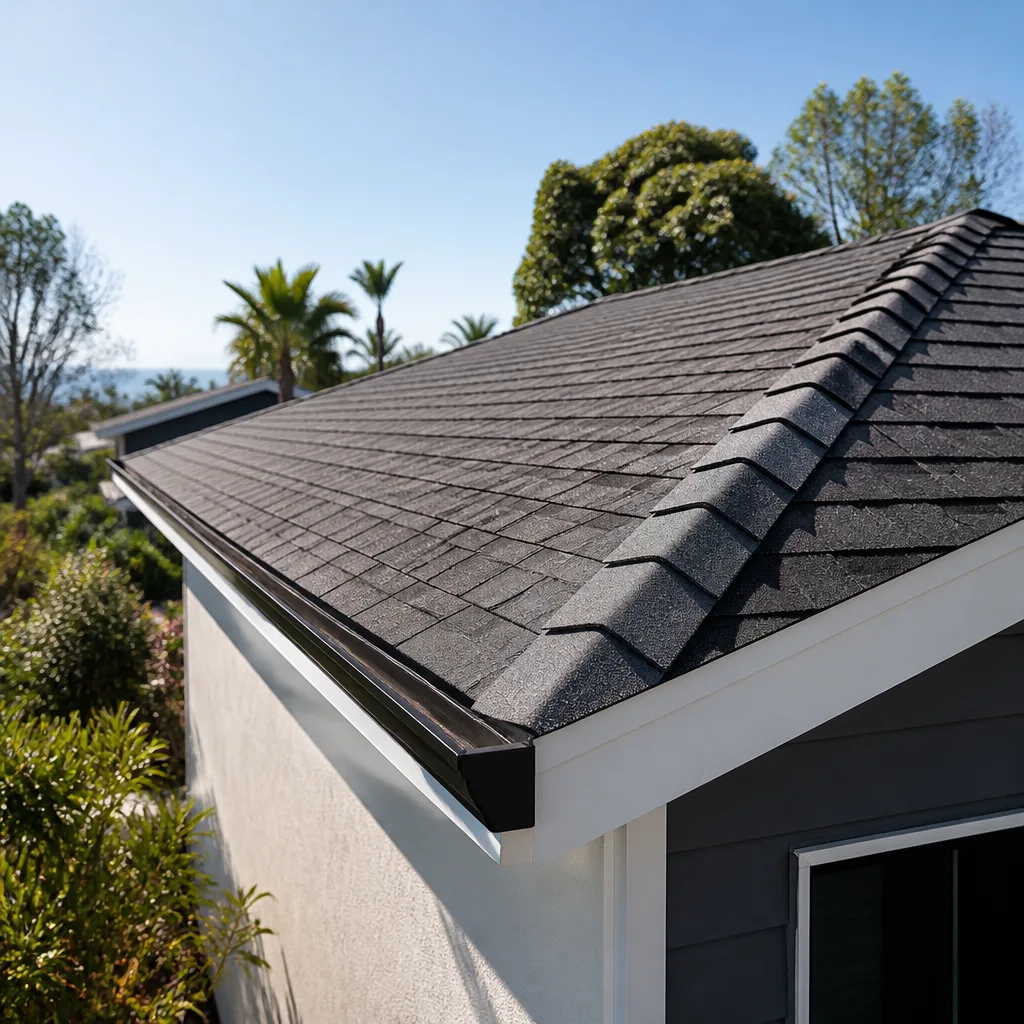
Widely chosen for cost and appearance, with a broad set of manufacturer warranties across major brands like GAF and CertainTeed. Replaced roofs on existing homes are commonly architectural shingle because the material choice and install path are well understood and the color options look good on the older wood-framed homes common around the older parts of Elk Grove.
Tile
Tile holds up to the sun and offers long service life, and it’s what a lot of the newer subdivisions already have. If your existing roof is tile, replacing with tile often preserves the home’s look and isn’t a structural change.
Metal
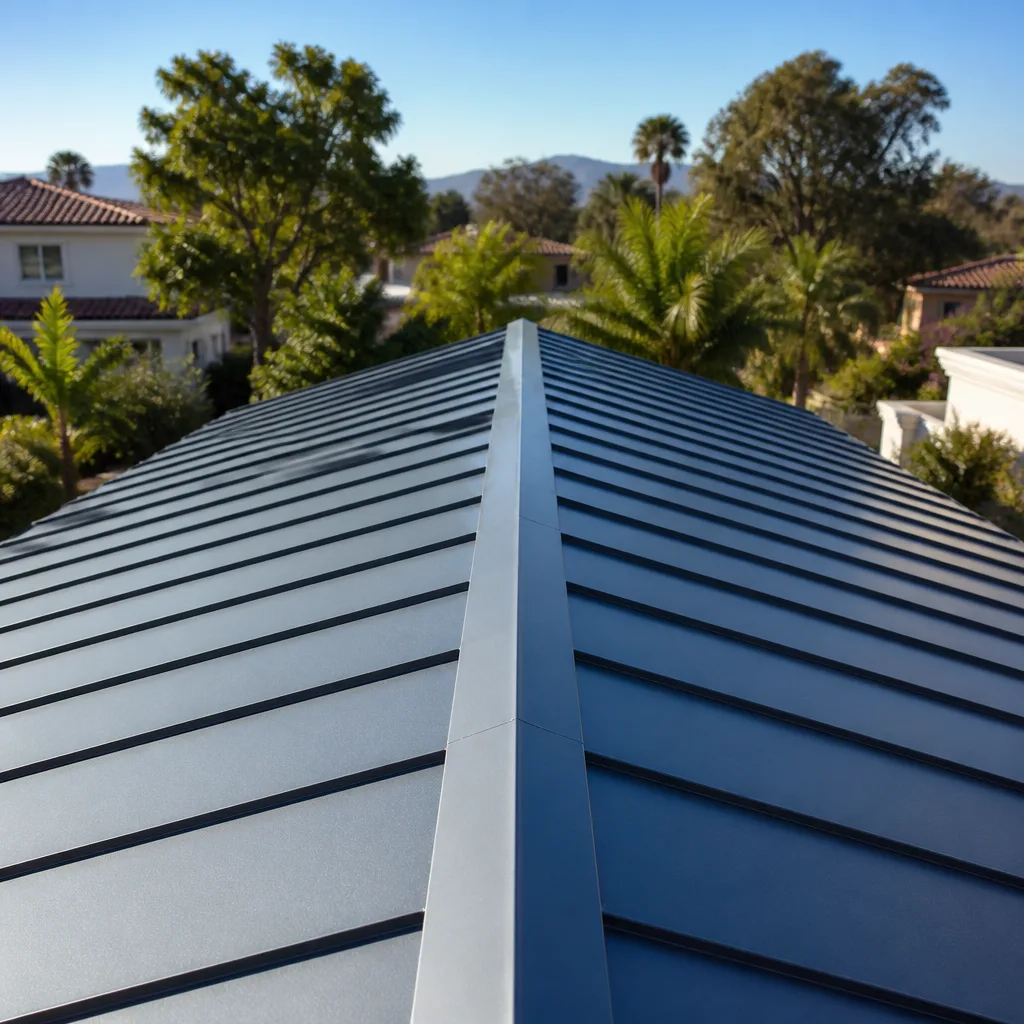
Metal is a strong choice where snow isn’t a concern and where heat reflectivity matters. On Elk Grove roofs, metal panels manage the summer sun effectively and hold their shape. The trade-off is appearance and installation complexity.
Choosing between them
- Match the material to the pitch and structure of your home, not just the current fashion.
- Ask about the manufacturer-backed warranty and whether it transfers if you sell the home.
- Ask for a written, line-item estimate showing removal, deck inspection, underlayment, and materials separately.
- Ask about the brands being used. We carry seven manufacturer lines so the right roof for your home isn’t decided by a supply contract. GAF, CertainTeed, and Owens Corning are all in the mix.
Any of the three systems can be the right answer. The wrong answer is picking a material because it’s what a one-brand shop happens to sell. If you’re weighing shingle specifically, our page on shingle roofing covers the material trade-offs in more depth. If you’re starting fresh, our Roofing Elk Grove Pros overview lays out how we approach every project type, from new construction installs to full tear-off replacements.
Common Mistakes to Avoid
- Treating every warning sign as a Tier 1 emergency. A granule-filled gutter is a notice, not a crisis. Reacting to it with an emergency call gets you a repair you didn’t need and a lighter wallet.
- Treating every warning sign as “the roof has years left.” Water staining and daylight in the attic don’t fix themselves. Waiting a season on a Tier 1 sign is how a shingle repair turns into a sheathing replacement.
- Confusing flashing and drainage issues with roofing issues. From inside, a flashing failure and a shingle failure look identical. From the roof, they’re different trades of work with different price tags. Ask for the diagnosis before you accept the fix.
- Assuming a tile roof with cracked ridge mortar is “just cosmetic.” The tiles aren’t the waterproof layer in a tile system; the underlayment is. A loose ridge cap is a warning, not a mark on a checklist.
- Judging roof life by installation date alone. On Elk Grove homes, south and west slopes age much faster than shaded slopes. Two roofs installed the same year can be in entirely different condition.
- Hiring a roofer who sells one brand. The brand should be chosen after the material and structure are considered, not handed to you because it’s the one in stock.
- Ignoring the attic until the stain appears on the ceiling. By the time water reaches the living space, it has already been in the roof system for a while. Attic checks are the cheapest early warning you have.
See the difference
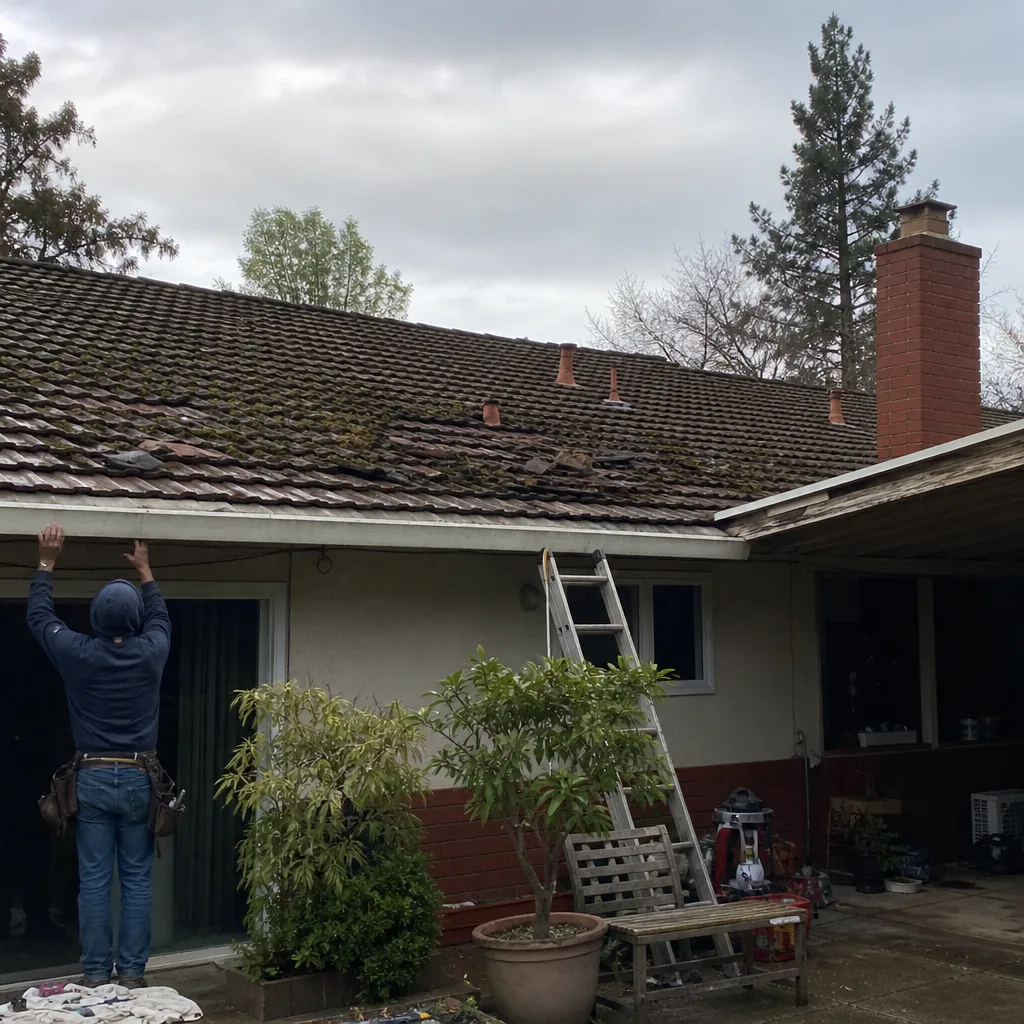 Before
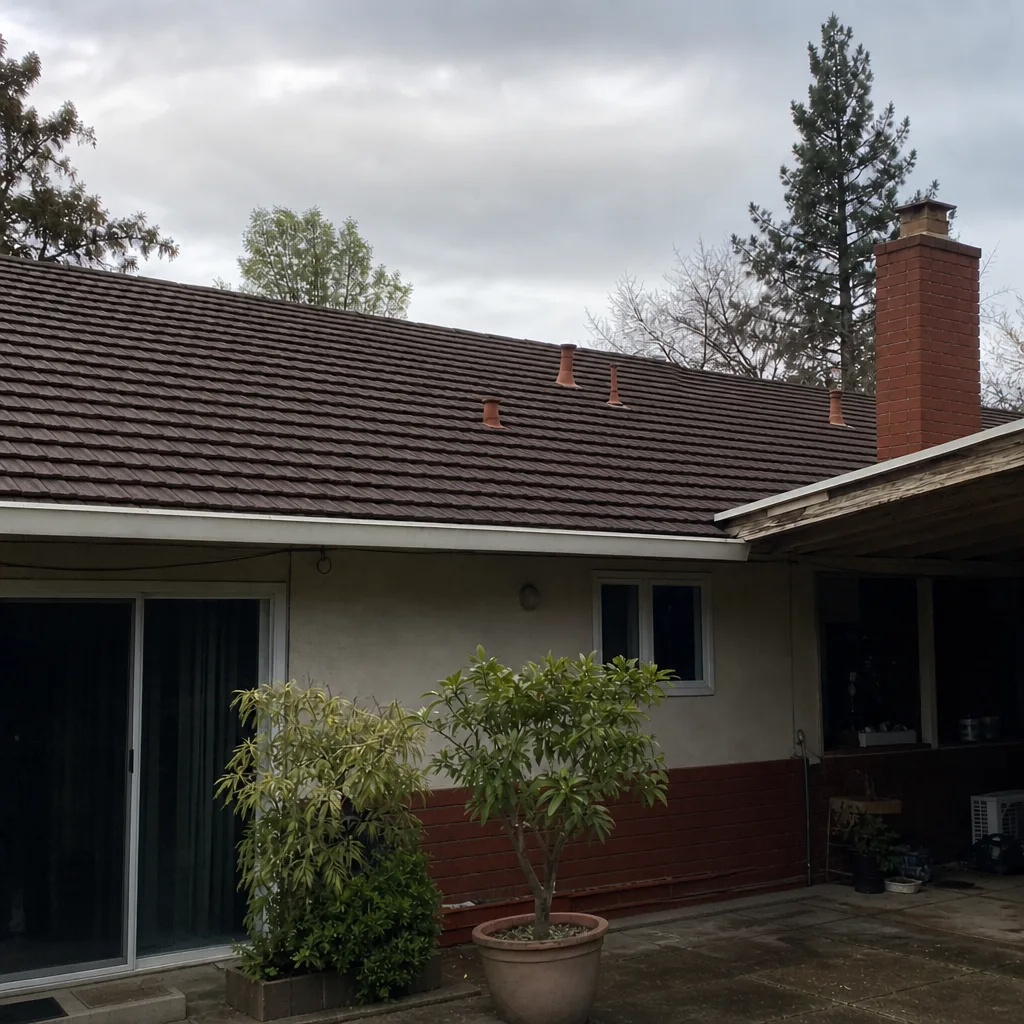 After
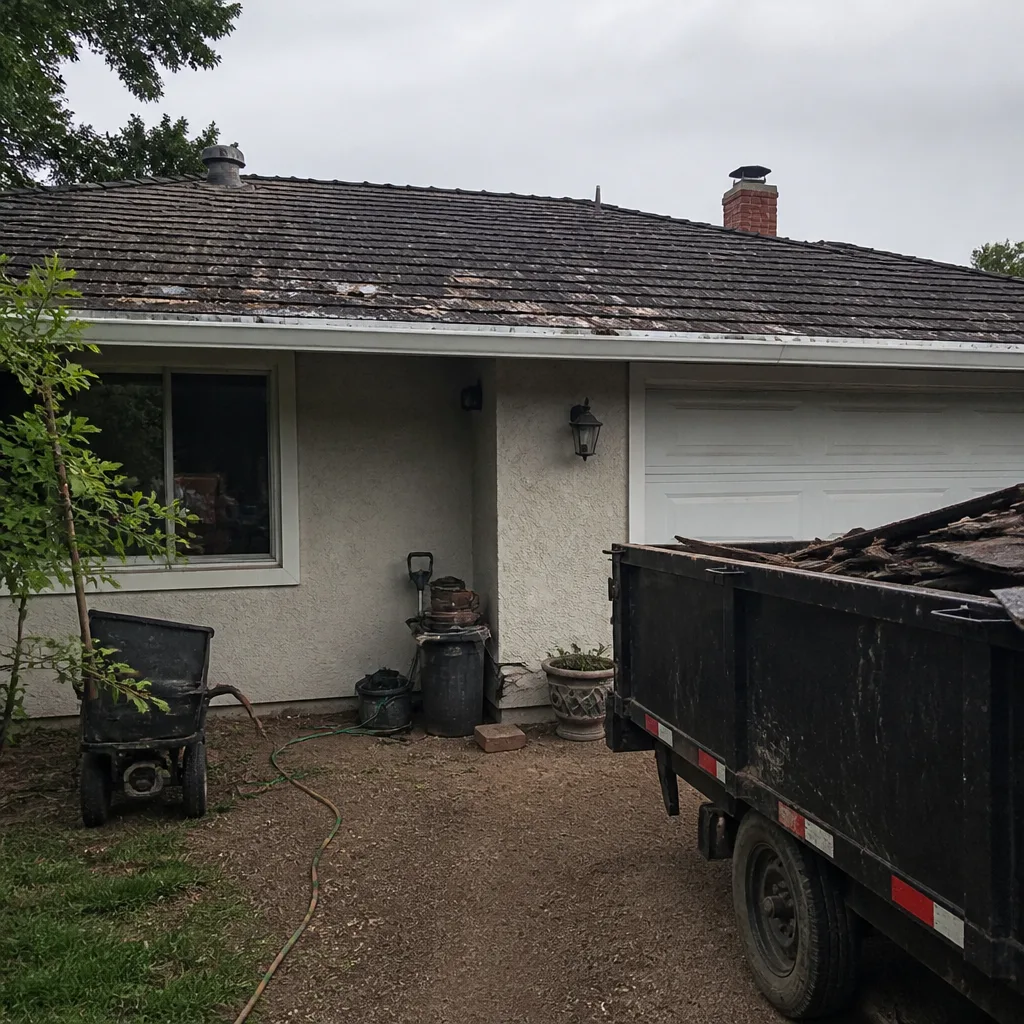 Before
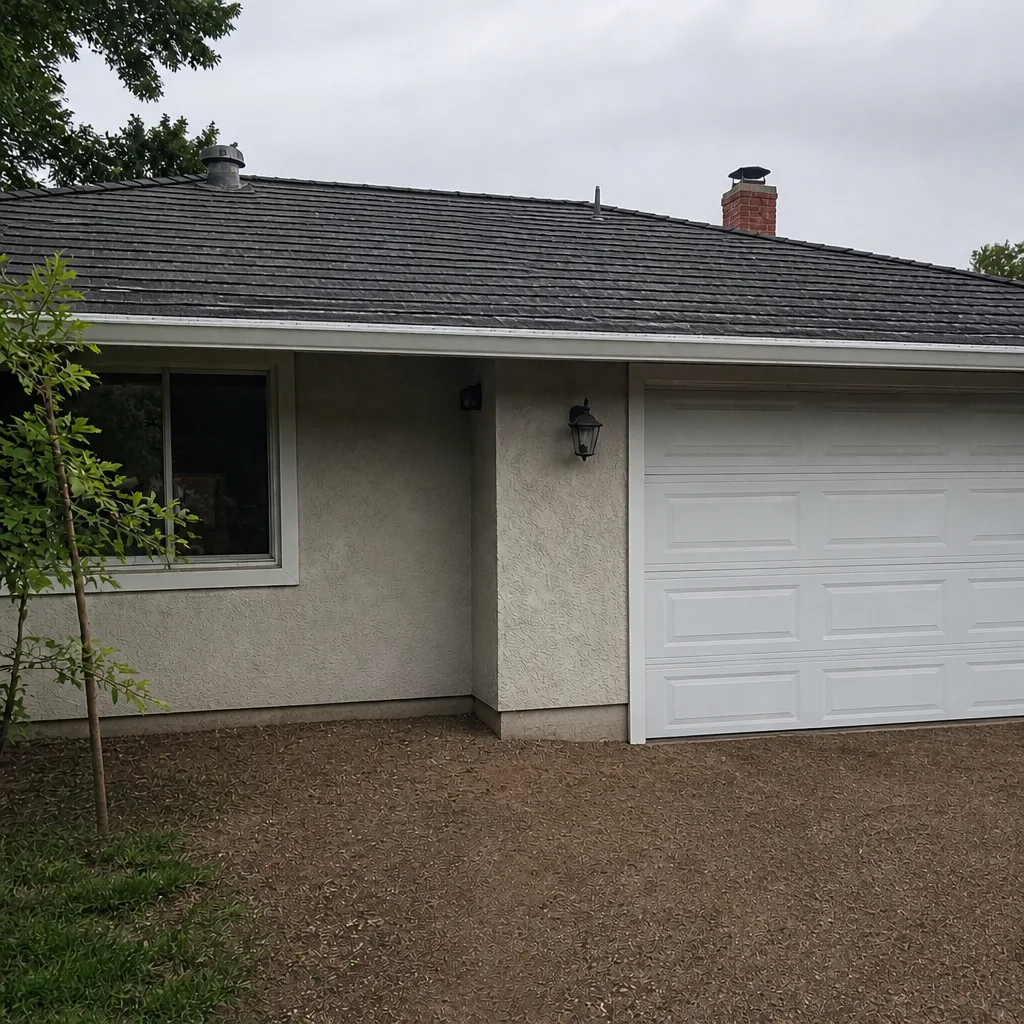 After
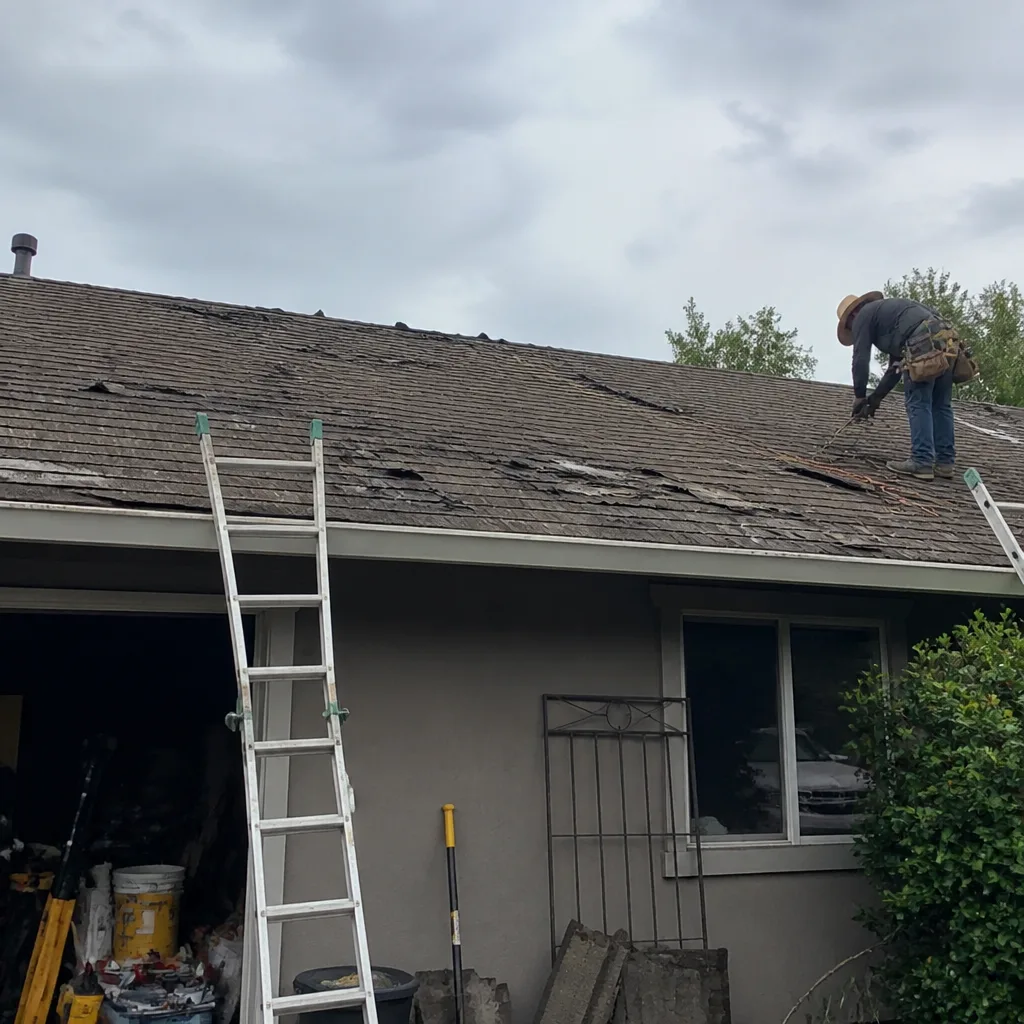 Before
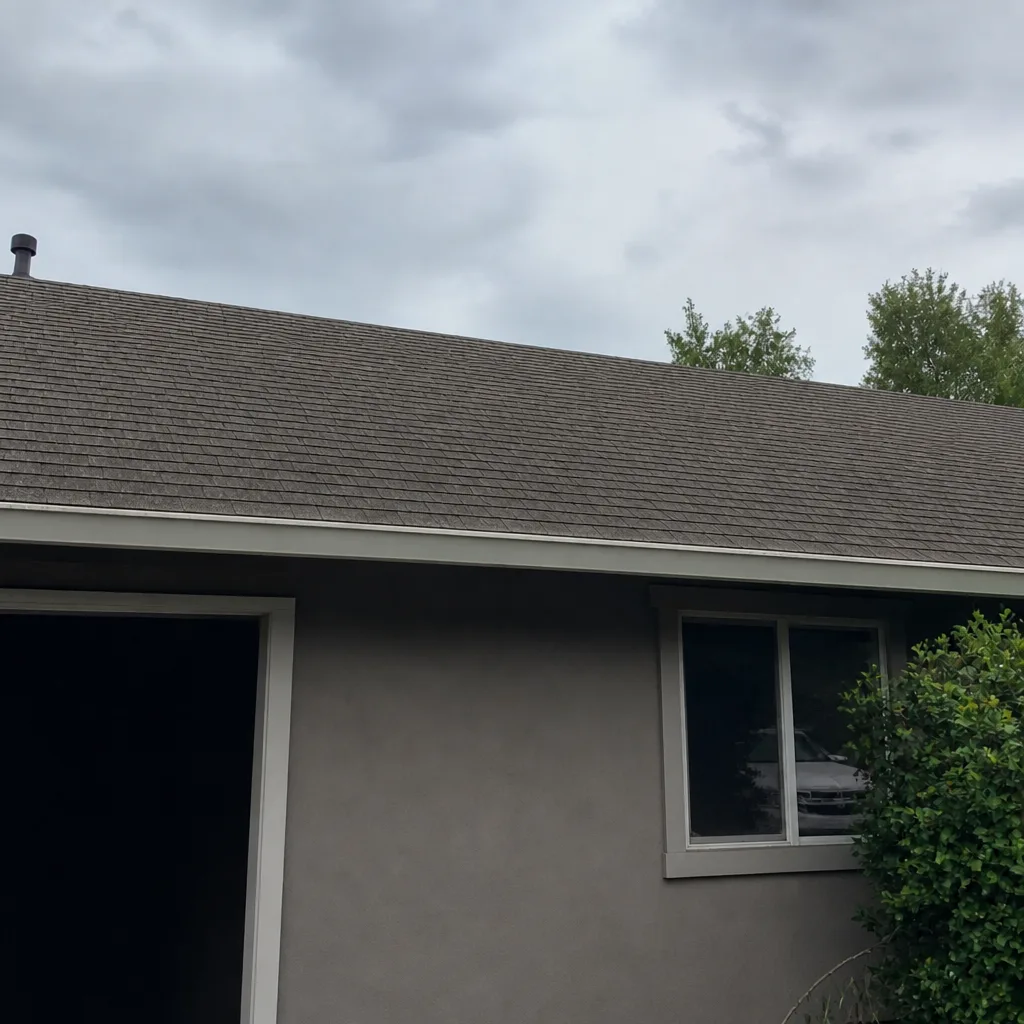 After
When to Call a Professional
Call a professional when you see any Tier 1 sign: interior water staining that appears or grows during rain, missing or displaced roofing material, daylight through the roof deck in the attic, a sagging roofline, or an active leak. Call when a Tier 2 sign shows progression after a summer season, especially granule loss that increases noticeably, widespread shingle cracking, or mortar failure at ridge and hip caps on a tile roof. If you can’t tell whether your issue is roofing, flashing, or drainage, a roofer is the right call to make the diagnosis. Our team can inspect, diagnose, and lay out a written plan. Our technicians have up to 12 years of experience, and we’ll tell you whether you need a repair, a scheduled replacement, or nothing at all right now. Roofing Elk Grove Pros offers free estimates in Elk Grove – call (279) 333-8281. We answer 24/7. Fast dispatch from 7am to 7pm, Sunday through Friday.
Frequently Asked Questions
The first signs are usually granule loss, then curling or cracking shingles on the most sun-exposed slopes, then interior staining as the failure reaches the deck. Granule loss alone is early-stage. Interior staining means water is already entering the roof system, and that’s when the conversation shifts from repair to planning a replacement. If you see staining, get an inspection. Call (279) 333-8281 for a free estimate.
If the warning signs are confined to one slope or one area and the deck is sound, a targeted repair is usually the right call. If the signs are widespread across multiple slopes, if the same area keeps leaking after repairs, or if the cost of successive repairs is climbing toward replacement cost, replacement is the better move. The written estimate should tell you clearly which it is. Call (279) 333-8281 to get one.
A single cracked or displaced shingle is not an emergency; it’s a scheduled repair. An active leak, a missing section of roofing material, or water visible on a ceiling during rain is an emergency. If you’re not sure which you have, call and describe it; the triage will sort out fast. Call (279) 333-8281. We answer 24/7. Fast dispatch from 7am to 7pm, Sunday through Friday.
Yes. On tile, the primary warning sign is mortar failure at ridges and hip caps, along with shifted or broken tiles. On shingle, the primary tier signs are granule loss, cracking, and curling. On tile, the underlayment below the tile is the waterproof layer, so mortar failure is a warning that water is reaching that layer. Call (279) 333-8281 for a tile-specific inspection and free estimate.
Almost never. Granule loss and cracking progress with the seasons. A moss or algae streak can disappear in dry weather, but the underlying cause (moisture retention) doesn’t. Treat any warning sign you can see as a data point to track, and any interior sign as one to act on. Call (279) 333-8281 for a free estimate if you’re not sure what you’re looking at.
A Tier 2 sign can become a Tier 1 sign. A curling shingle can become a leak, a mortar crack can become a wet underlayment, and a soft spot in the deck can turn into a larger repair. The risk isn’t a sudden collapse; it’s compounding repair cost. If you’re on the fence, a free estimate answers the question without committing you to anything. Call (279) 333-8281.
The Bottom Line
The useful skill in roof care isn’t spotting every defect. It’s sorting the defects by urgency. Tier 1 signs (interior leaking, missing material, daylight in the attic) get a call today. Tier 2 signs (granule loss, widespread cracking, tile mortar failure) get an inspection in the next month. Tier 3 signs (mild wear, isolated streaks) get tracked and photographed. In Elk Grove’s climate, sun is the primary force aging a composition roof, and the south and west slopes lead the way. Read the roof’s condition, not the calendar, and get a written diagnosis before agreeing to any fix. That’s the difference between a planned repair and an expensive reactive one.
Written by the team at Roofing Elk Grove Pros.