Last updated November 25, 2026


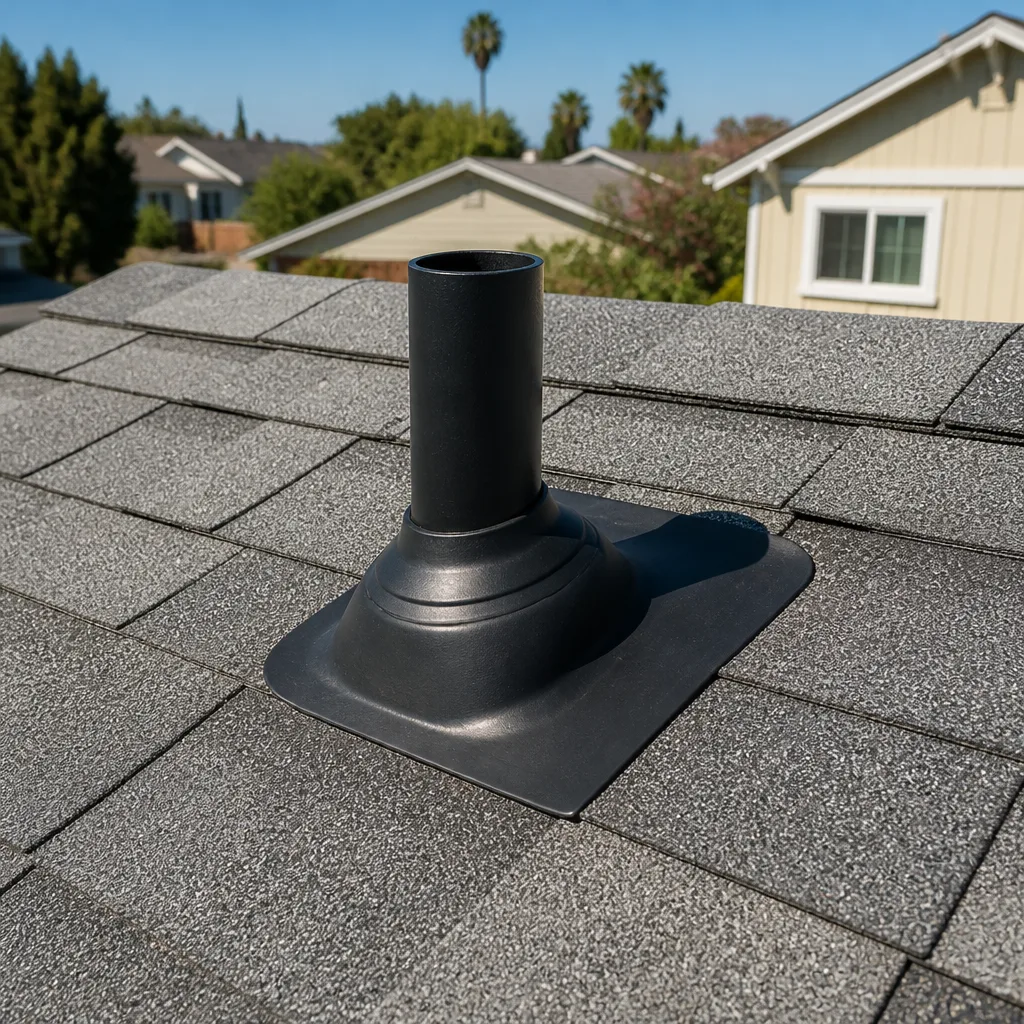
Free roof inspection with deck photos before we talk money - GAF and Owens Corning certified installation
Roof Replacement Maintenance Checklist for Elk Grove Homeowners
A new roof can cost you its manufacturer warranty inside two years if three post-install conditions go unchecked, and two of them have nothing to do with the shingles. Most homeowners assume the hard part ends when the crew leaves. In our experience, the first twenty-four months are when a replacement either proves itself or quietly starts to fail, often in ways that never show up from the driveway. This guide lays out what to verify in the first 90 days, how to read attic ventilation performance through a Sacramento Valley summer, which flashing transitions fail first on Elk Grove homes, a season-by-season task calendar built around our actual weather, and the paperwork that keeps your warranty and future insurance claim alive.
Quick Answer
A roof replacement in Elk Grove needs three things to hold up: a documented 90-day post-install inspection before the workmanship warranty window narrows, attic ventilation that actually moves heat out during Sacramento Valley summers, and a seasonally timed maintenance rhythm (spring roof-and-flashing check, late-spring attic audit, fall debris clearing, winter wear inspection) that keeps valley flashing and gutter transitions from failing first. Keep every photo, permit, and material spec sheet, because manufacturer coverage depends on documented installation and maintenance.
Styles & brands we work with
- Architectural shingles
- Metal roofing
- Tile roofing
- GAF
- Owens Corning
- Flat & low-slope
Table of Contents
- The 90-Day Post-Install Inspection List
- What to Verify Before Your Workmanship Warranty Window Closes
- Monitoring Attic Ventilation After Replacement
- Valley Flashing and Gutter Transitions: Where Roofs Fail First
- Seasonal Maintenance Calendar for Elk Grove Weather
- Documentation That Protects Your Warranty and Insurance Claim
- How Maintenance Shifts Across Shingle, Tile, and Metal
- What You Can Check Yourself and What Needs a Roofer
The 90-Day Post-Install Inspection List
The first 90 days after a replacement are the most informative window you’ll get. New materials settle, sealant strips activate under heat, and any installation weakness shows itself while the contractor’s workmanship warranty is still fresh and easy to enforce. Walk this list methodically rather than eyeballing the roof once and moving on.
- Ground-level visual sweep. From the yard, check ridge lines for straightness and look for lifted or curling edges on the field shingles. Photograph anything that looks off with a date stamp.
- Gutter and downspout flow. Run water and confirm it drains cleanly. New roofs shed granules and small debris for the first few rains, so clear downspout screens early.
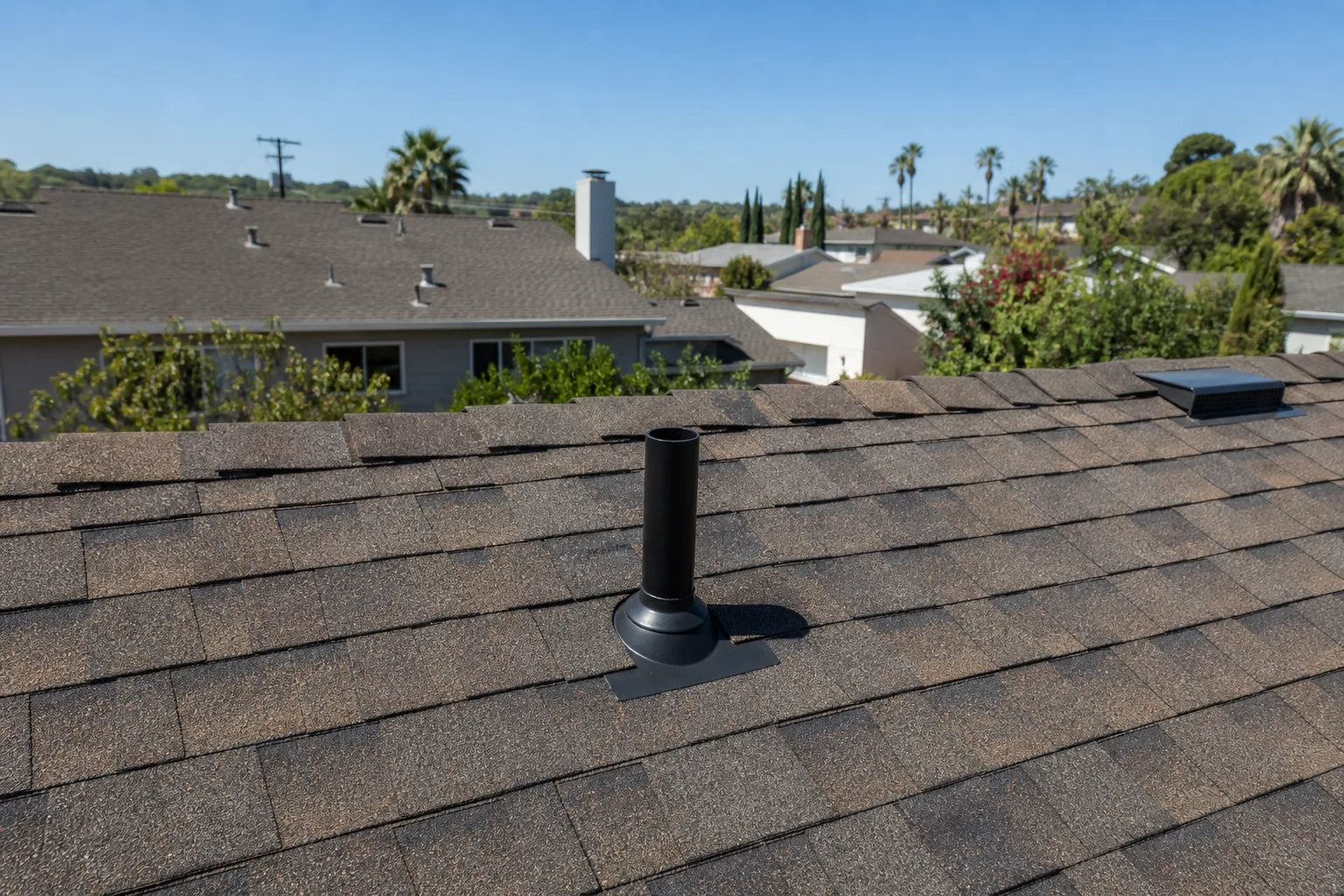
- Fastener and penetration check. Where vents, satellite mounts, or skylights meet the roof, look for cracked sealant or loose flashing. These points move as materials expand in the heat.
- Attic interior scan. On a bright day, look for daylight at seams and check for any water staining on rafters or sheathing under the decking.
- Valley and transition review. Inspect where roof planes meet and where the roof meets a wall or gutter edge. These are the highest-risk early-failure spots.
- Confirm your paperwork. Make sure you have the material spec sheets, permit record, and workmanship warranty in hand, not promised for later.
If a brand like GAF, CertainTeed, or Owens Corning is on your roof, ask for the manufacturer documentation that ties your specific materials to their coverage. That paperwork is often required to make a claim later. If you’re still comparing contractors and haven’t replaced yet, see our guide to roof replacement for what a full tear-off should include.
What to Verify Before Your Workmanship Warranty Window Closes
Workmanship warranties are the safety net most homeowners never use, largely because they don’t know what to document. The window varies by contractor, but the principle holds: the longer you wait, the harder it is to prove a defect traces back to installation rather than wear or neglect. Before that window narrows, verify these items and put them in writing.
- Sealed and photographed details. Demand close-up photos of valleys, flashing, and penetrations at install completion. If your contractor didn’t take them, schedule an inspection to capture them now.
- Decking condition record. Confirm in writing that any rotted or replaced sheathing was noted, so future disputes don’t blame pre-existing damage.
- Attic ventilation spec. Get the intake and exhaust spec in writing. Problems with ventilation often show up in the first hot season, and you want a documented baseline.
- Material lot and brand record. Save the packaging or spec sheets identifying the exact product line, whether that’s IKO, CertainTeed, or another brand.
- Permit and inspection sign-off. Keep the final inspection documentation. It supports both warranty and resale.
In our experience, homeowners who keep a single folder with the contract, photos, spec sheets, and permit record have a far easier time when a question arises in year three or four. That folder is worth more than any verbal promise.
Monitoring Attic Ventilation After Replacement
This is the single biggest long-term factor for Elk Grove roofs, and it’s the one most maintenance checklists skip entirely. Sacramento Valley summers push attic temperatures well above outside air, and a roof that can’t exhaust that heat bakes its own shingles from underneath, shortens material life, and stresses the decking. A replacement is your best chance to get ventilation right, and your responsibility to monitor once it’s done.
Here’s how to check performance rather than assume it:
- Feel the difference. On a hot afternoon, compare attic air temperature near the ridge to outside air. A well-vented attic stays noticeably closer to outside temperature.
- Look for intake balance. Exhaust vents at the ridge only work if soffit or edge intake lets air in. Blocked intake is a common post-install problem, especially after insulation work.
- Watch for moisture symptoms. Condensation on rafters, rust on nails, or a musty smell point to poor airflow, even in a mild-winter climate.
- Re-audit seasonally. Ventilation performance can drift as insulation settles or debris collects at intake screens.
If your attic runs hot or damp after a replacement, it’s worth a professional look before the next summer. Under-ventilated attics are also the quiet reason many warranty claims get denied, since manufacturers can tie premature failure to poor ventilation. Getting the balance right at install is easier than fixing it later, and it’s one reason we install all three major systems rather than forcing every home into one material.
Valley Flashing and Gutter Transitions: Where Roofs Fail First
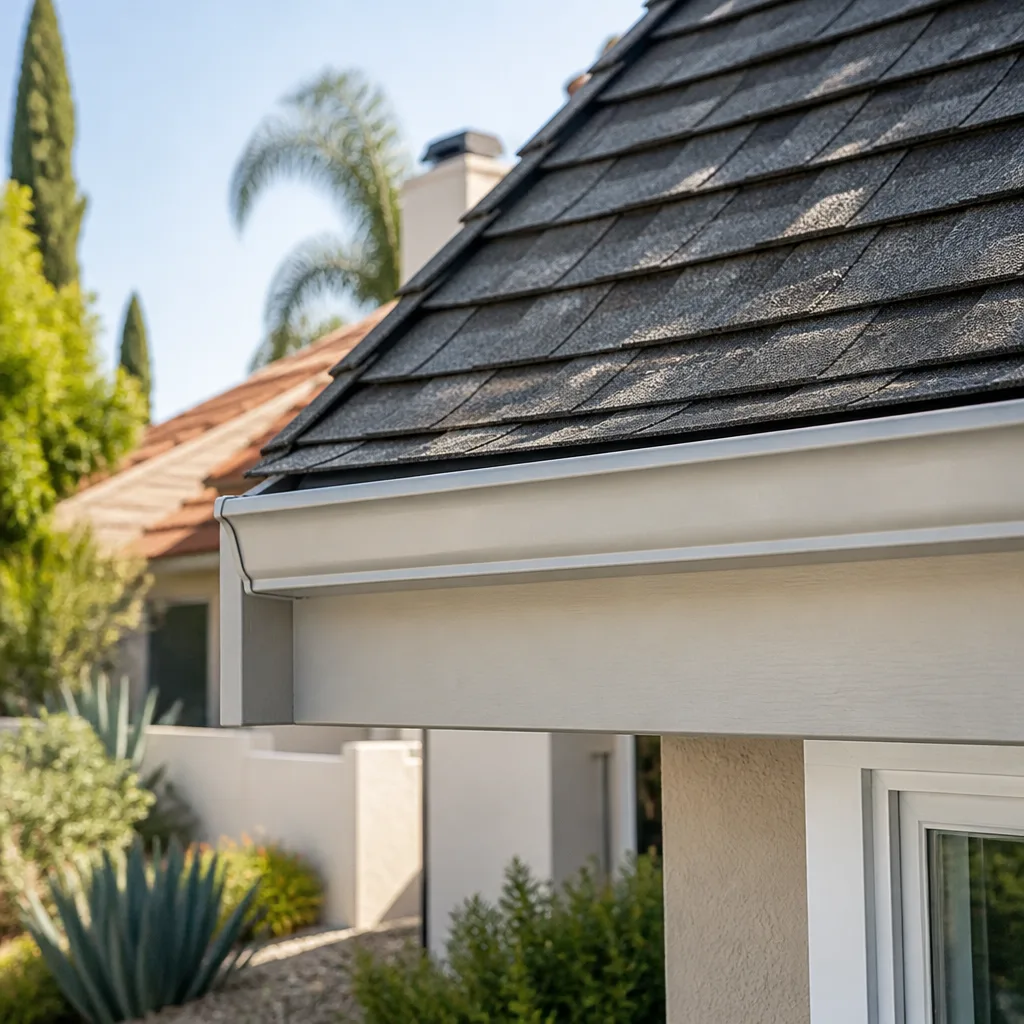
If you watch one area of a new roof, watch the valleys and gutter transitions. These are the joints where roof planes meet and where water leaves the roof, and on Sacramento-area homes they’re the first places to show early failure. Water concentrates at valleys, and the gutter line takes the full load of everything the roof sheds. A failure here rarely announces itself until it’s reached the decking or the fascia.
- Valley debris traps. Leaves and granules collect where planes meet. Check and clear after windy periods and before the rainy season.
- Gutter attachment and pitch. Confirm gutters are firmly attached and pitched toward downspouts. A replacement can shift the roof edge and affect how water exits.
- Sealant at wall-to-roof junctions. UV exposure and summer heat dry out sealant faster than most homeowners expect. Inspect and note cracking.
- Downspout discharge. Make sure water is carried away from the foundation, not pooling at the base of the wall.
- Fascia and soffit condition. Rot or separation here signals water taking the wrong path.
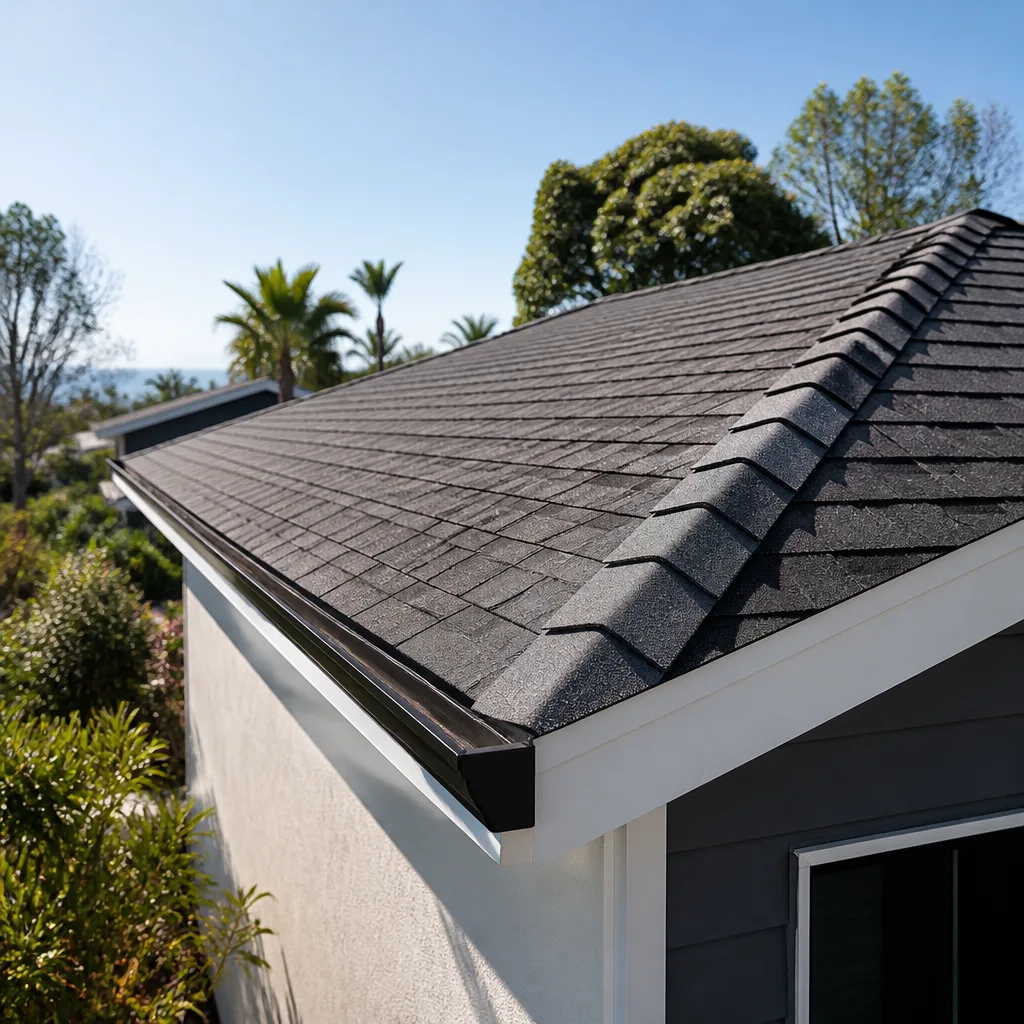
These transition points matter on every roofing system, whether that’s architectural shingle roofing or a tile or metal install, because water physics don’t care what the surface material is. In our experience, valley and gutter failures are among the most preventable problems we see, and the cheapest to catch early.
Seasonal Maintenance Calendar for Elk Grove Weather
Generic four-season checklists assume snow, ice, and deep freezes. Elk Grove doesn’t work that way. Our calendar runs on hot, dry summers and mild, wet winters, and the tasks should follow that rhythm rather than a boilerplate model. Here’s a maintenance schedule calibrated to what actually happens here.
Spring (mild and warming)
- Walk the roof edges and valleys for winter wear and any lifted material.
- Clear debris from valleys, gutters, and downspout screens.
- Inspect sealant and flashing at penetrations and wall junctions.
Late Spring (pre-summer)
- Audit attic ventilation before the heat peaks, checking intake and exhaust balance.
- Check attic insulation for blockages at intake vents.
- Photograph anything questionable so you have a dated baseline.
Fall (pre-rainy season)
- Clear all gutters and downspouts before the first significant rain.
- Trim tree limbs away from the roof surface.
- Re-check valleys and transitions for debris and sealant condition.
Winter (mild and wet)
- Watch for water staining, drips, or pooling after storms.
- Confirm downspouts discharge away from the foundation.
- Note any granule loss or surface changes visible from the ground.
This is a maintenance rhythm, not a repair schedule. If any season turns up actual damage, that’s a professional call, not a task to defer. A roof that’s properly maintained through these cycles will outlast one that’s simply left alone.
Documentation That Protects Your Warranty and Insurance Claim
Warranty coverage lives and dies on documentation. Manufacturers and insurers both want a paper trail, and most homeowners lose claims not because the roof was defective but because they can’t prove how it was installed or maintained. Keep one folder, physical or digital, with everything below.
- The signed contract and written line-item estimate. This is your record of what was agreed.
- Material spec sheets and product brand. Whether your roof uses CertainTeed, GAF, Owens Corning, or another line, keep the exact product documentation. Transferable warranties often depend on it.
- Installation photos. Close-ups of flashing, valleys, and decking at completion.
- Permit and final inspection records. Proof the work was done to code.
- Workmanship warranty document. The contractor’s coverage terms, in writing.
- Maintenance log. A simple dated record of every inspection, cleaning, and repair. This is the document most homeowners forget, and it’s often the one that matters.
If you’re replacing your roof and want to understand what a manufacturer-backed selection looks like, our new roof installation page outlines how material choice ties to coverage. The more you document from day one, the stronger your position years down the line.
How Maintenance Shifts Across Shingle, Tile, and Metal
Maintenance isn’t identical across materials, and a checklist written for shingles only covers part of the picture. Since a proper replacement should match the material to the home, here’s how the upkeep differs across the three systems most Elk Grove homes use.
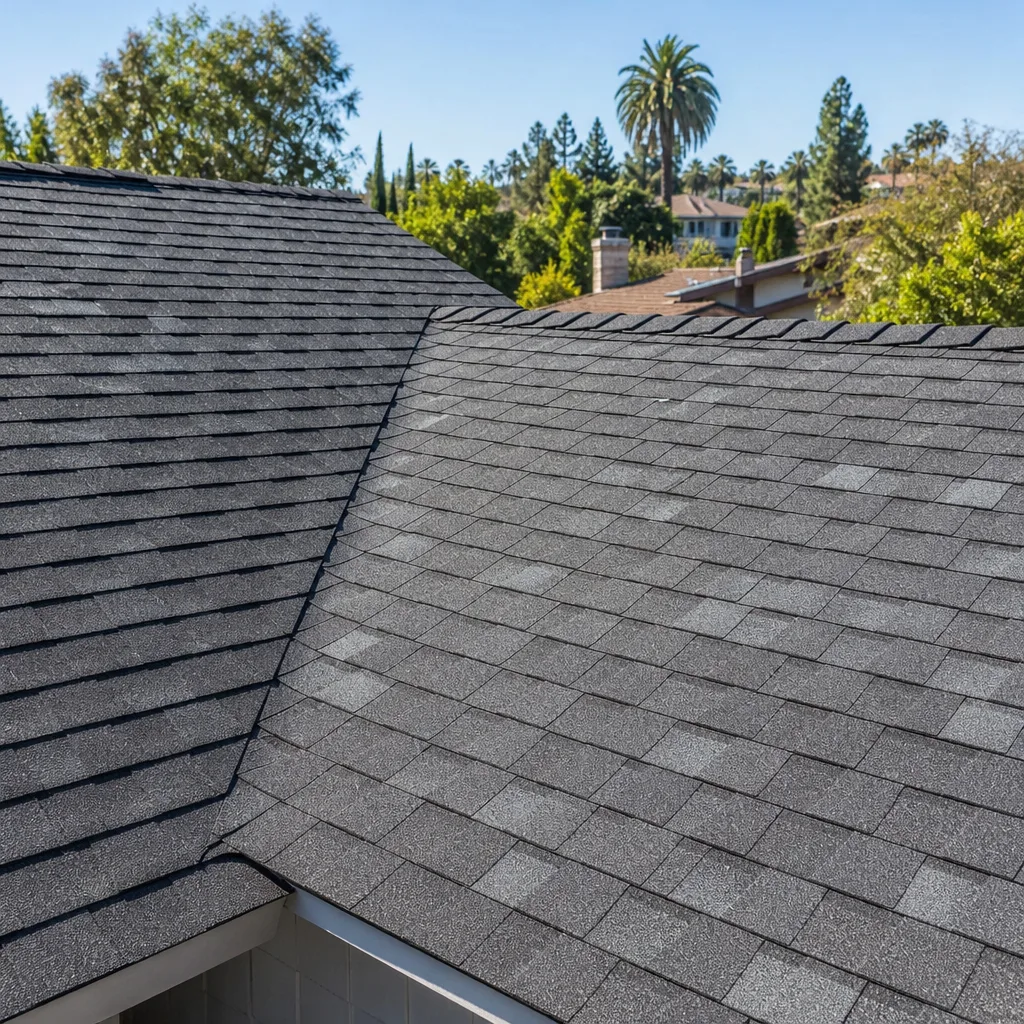
- Architectural shingle. Watch for granule loss, lifted or curling tabs, and sealant failure along edges. Valley debris and fastener sealant need periodic attention.
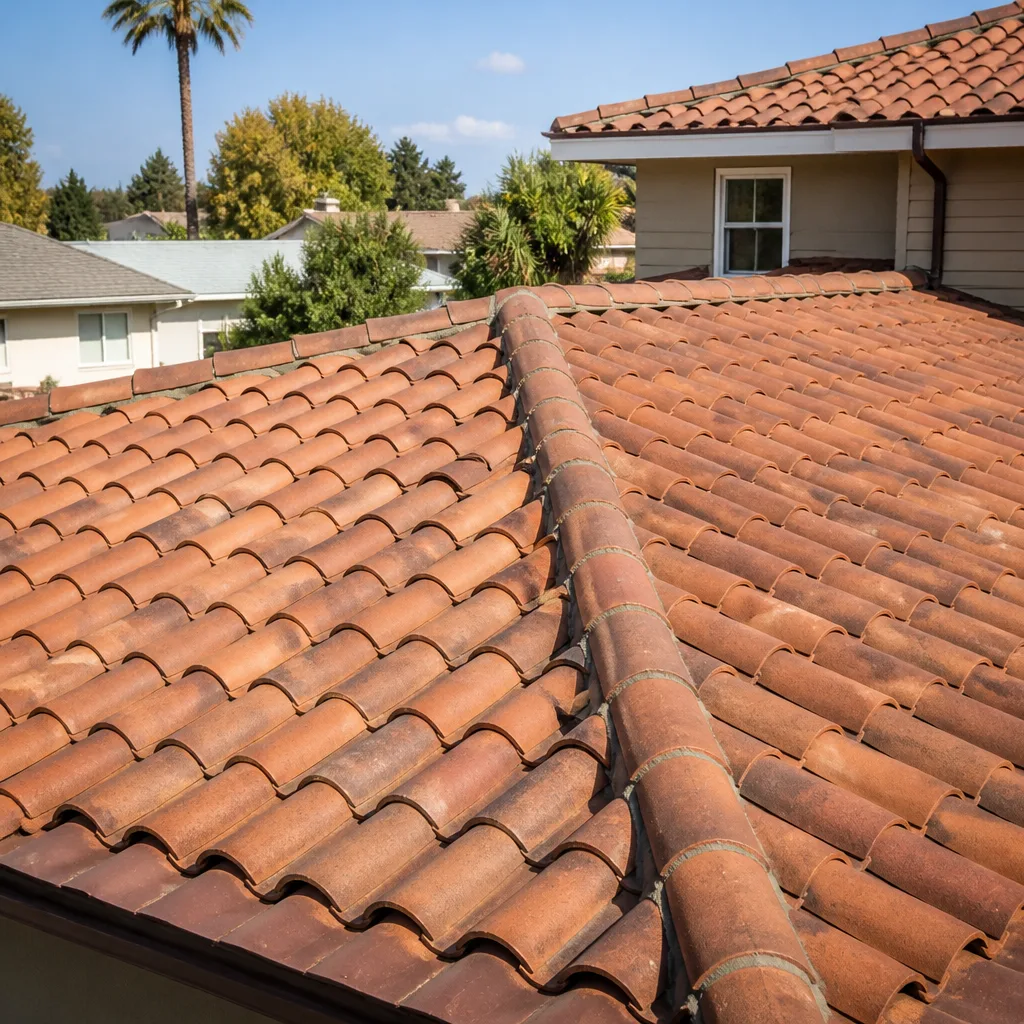
- Tile. Check for cracked or slipped tiles, especially after wind, and confirm underlayment isn’t exposed. Tile is durable but the underlayment beneath it is what actually sheds water.
- Metal. Inspect fasteners and seals at penetrations, and watch for any loosened panels or finish wear at cut edges. Metal is low-maintenance but not maintenance-free.
In our experience, the material affects the frequency of specific tasks, not whether maintenance matters at all. A homeowner who understands their material can spot a problem before it spreads, and that’s the point of the whole checklist.
What You Can Check Yourself and What Needs a Roofer
You can and should do the safe ground-level and attic-side checks on this list. You should not walk a steep or wet roof to inspect it, and you should never climb into a valley or onto a ridge to test a repair. Height work is the line where the checklist hands off to a professional.
- Safe for you: ground-level visual sweeps, attic interior scans, gutter flow checks, and documentation.
- Professional only: anything on the roof surface, flashings at height, and any repair to the roof itself.
- Call immediately: active leaks, daylight through the decking, loosened material after wind, or structural concerns.
Roofing involves real risk, and a fall from height is serious. If you’re ever unsure, stop and book a professional inspection rather than improvise. That restraint protects both your safety and your warranty.
Common Mistakes to Avoid
- Skipping the 90-day inspection. It’s the most informative window you get, and letting it pass makes any warranty claim harder to pursue.
- Ignoring attic ventilation. Elk Grove summers punish under-ventilated attics, and poor airflow is a top reason manufacturer coverage gets challenged.
- Letting valley and gutter debris pile up. These are the first transition points to fail, and debris accelerates the process.
- Treating a mild winter like a heavy-snow climate. Tasks built for freeze-thaw weather are wasted effort here; match maintenance to our actual seasons instead.
- Losing the paperwork. Without spec sheets, permits, and a maintenance log, an otherwise valid warranty claim can stall.
- Doing roof-surface work yourself. Height work isn’t a maintenance task; it’s a professional job for good reason.
- Assuming “low-maintenance” means no maintenance. Tile and metal reduce specific tasks, but they still need inspection.
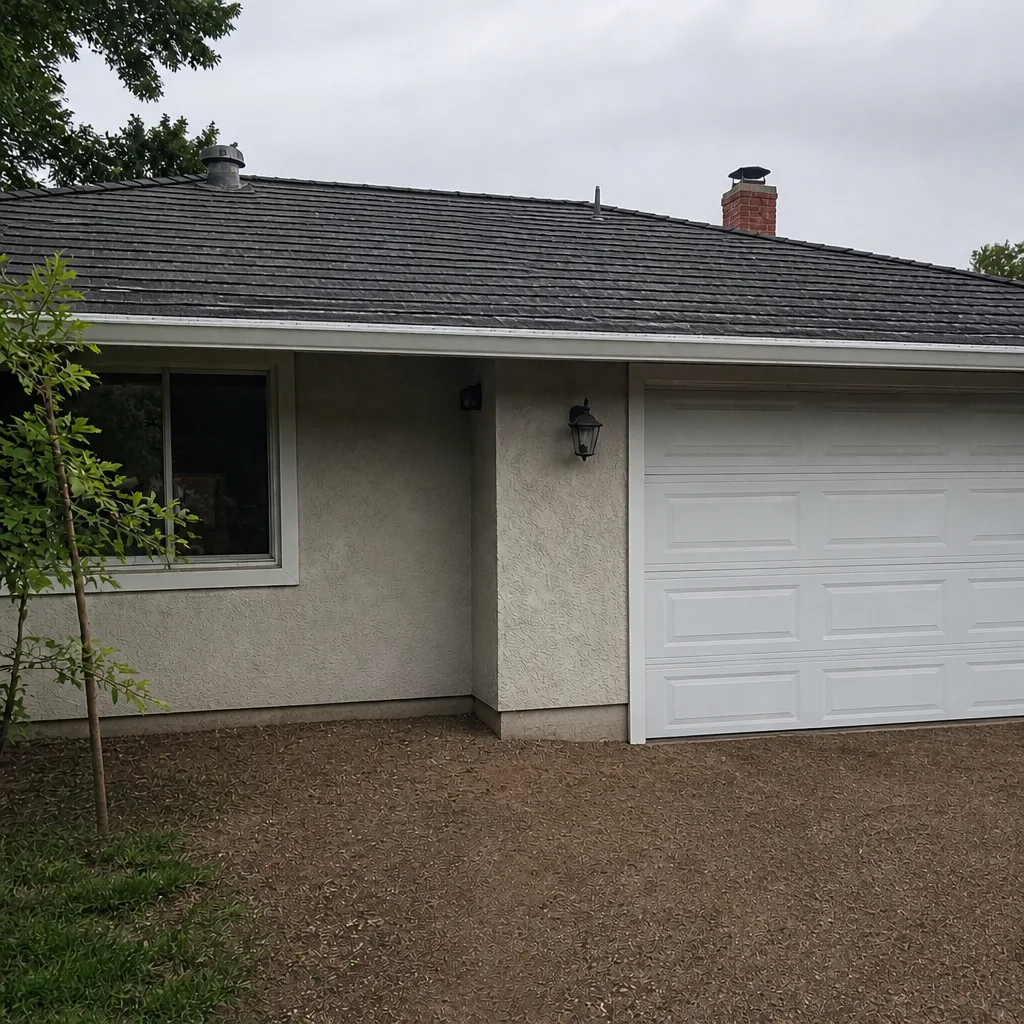
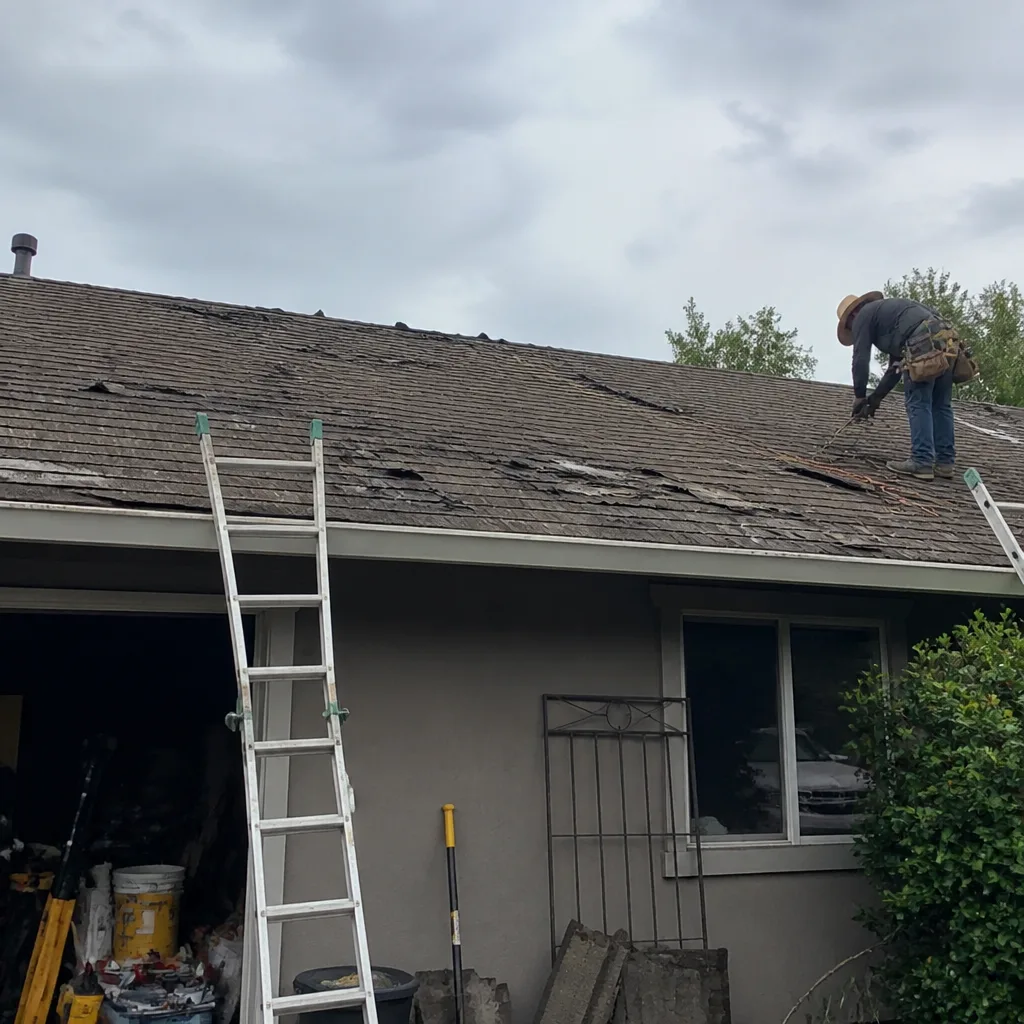
See the difference
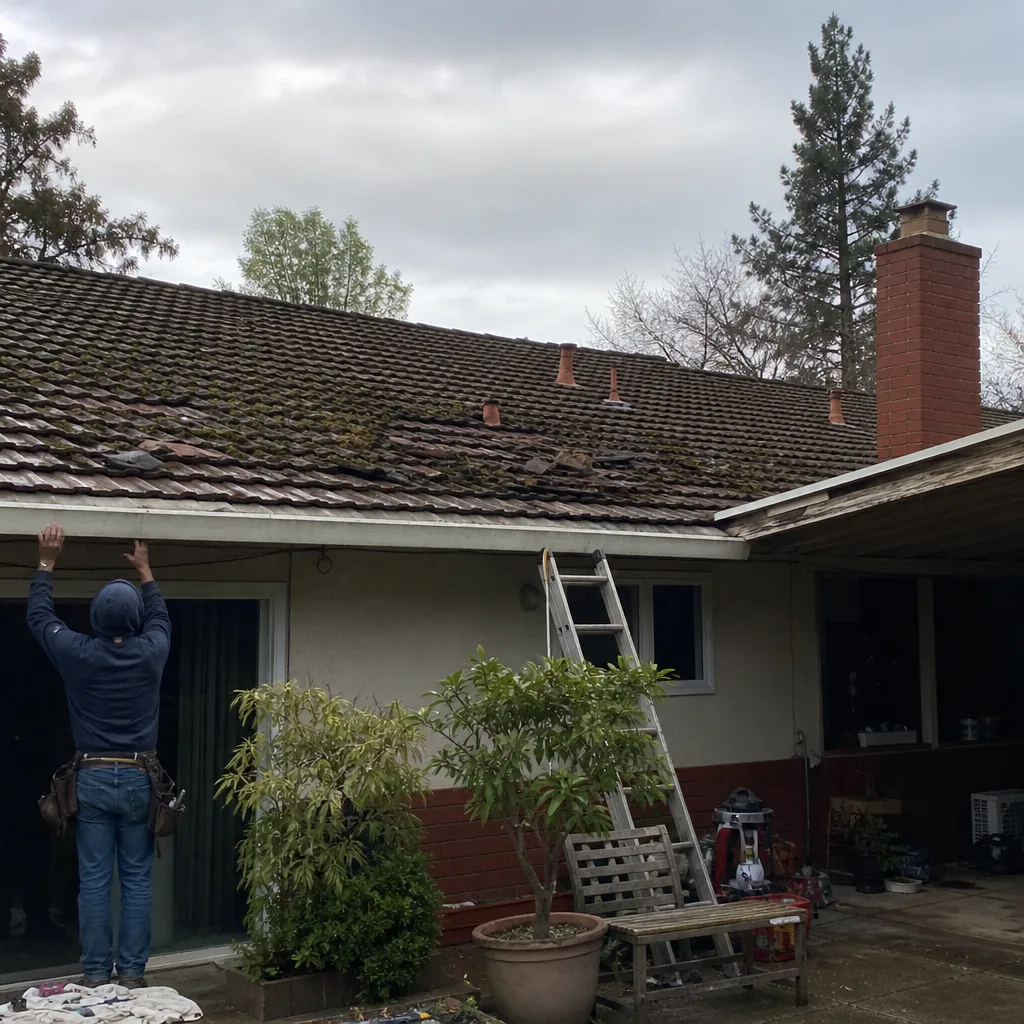 Before
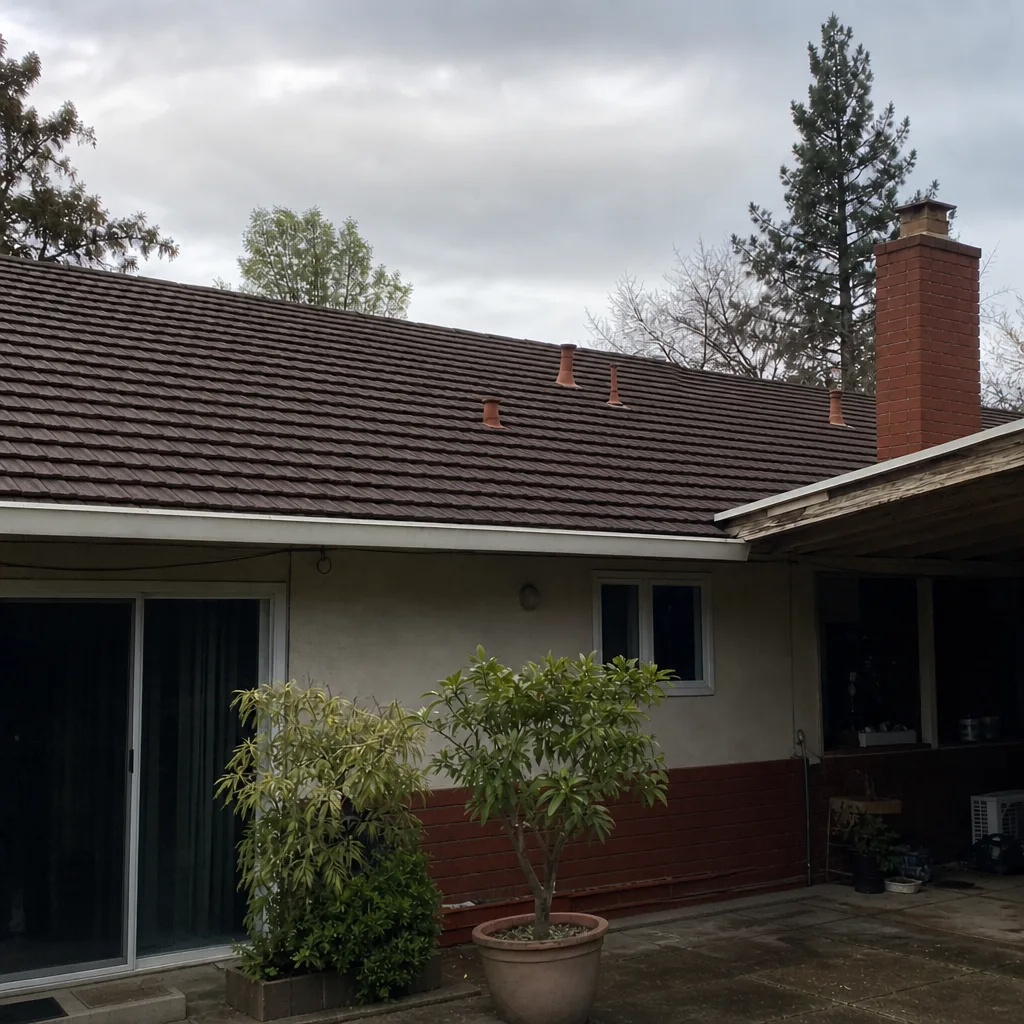 After
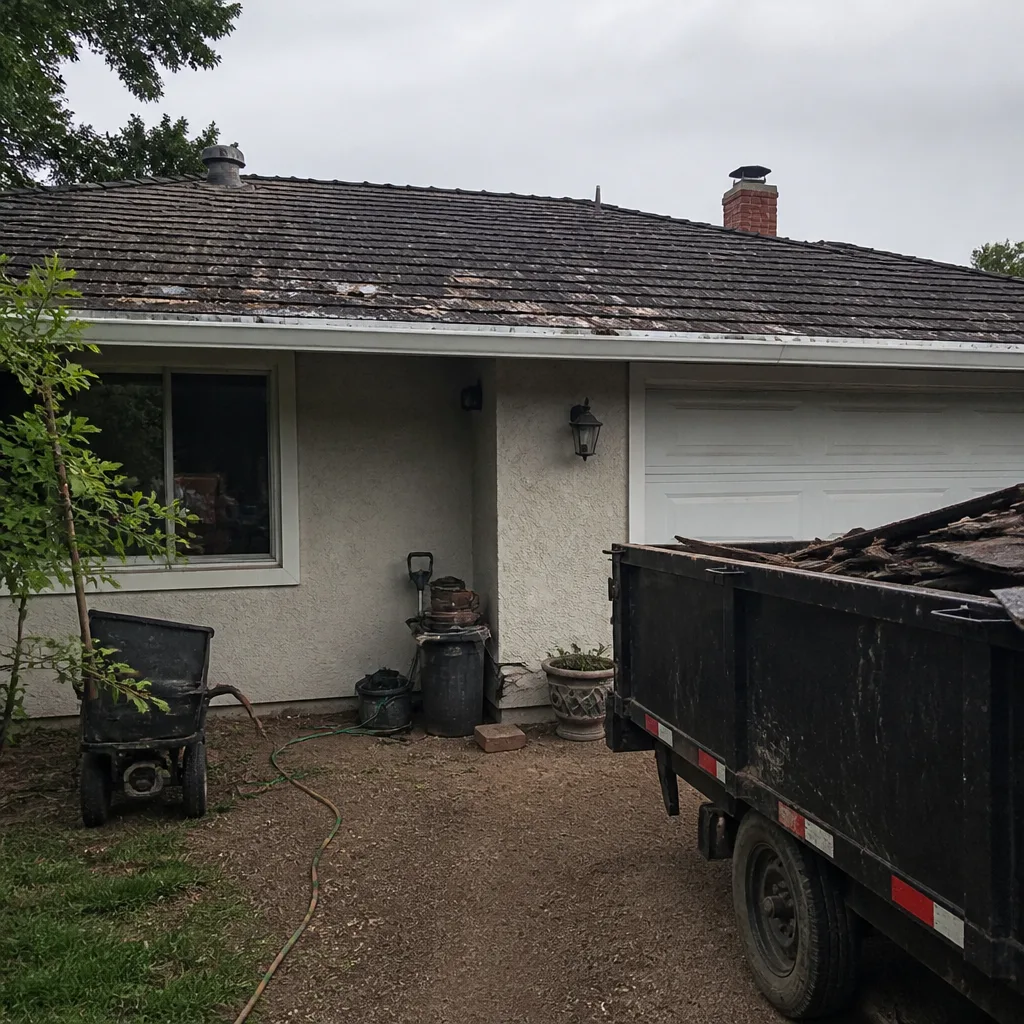 Before
 After
 Before
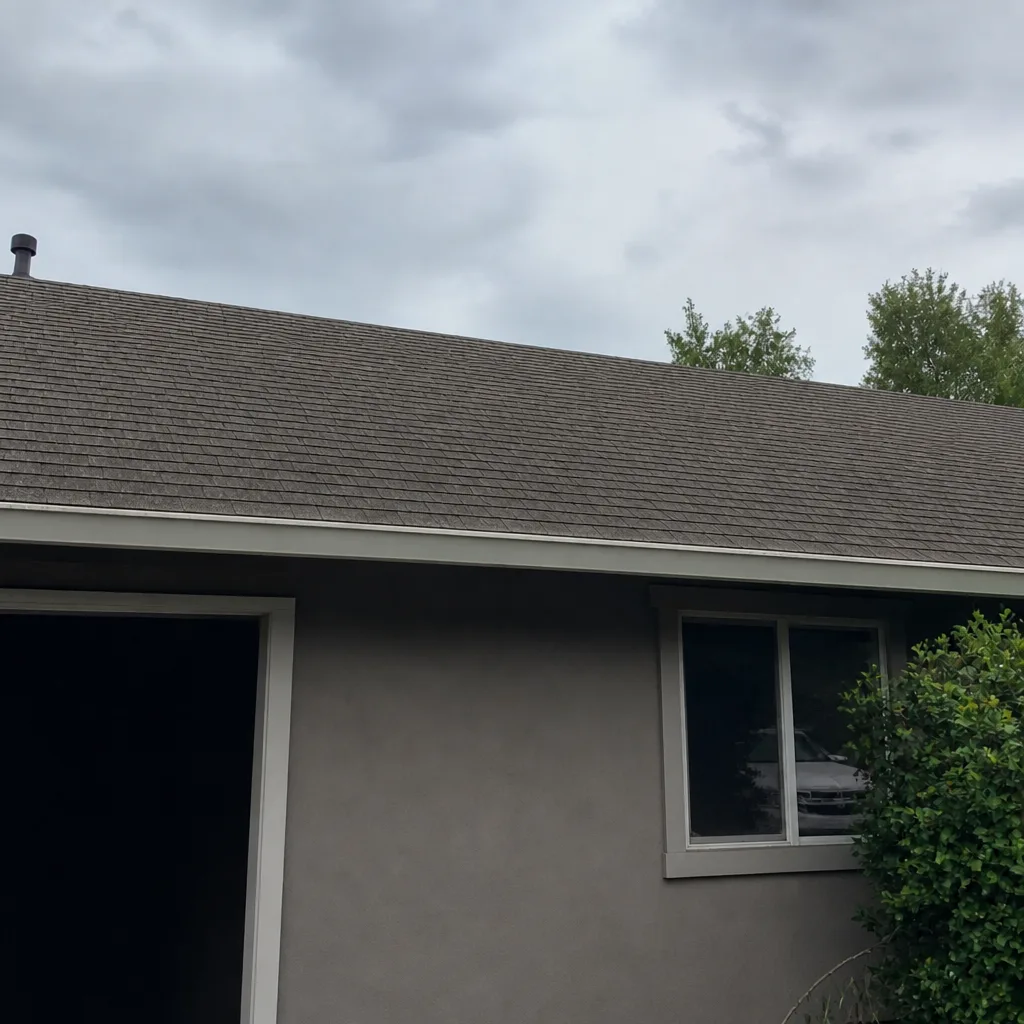 After
When to Call a Professional
Call a professional if you see active leaking, daylight through the decking, loosened or missing material after wind, staining on attic rafters, or a valley that’s not draining. Call before the rainy season if you find cracked sealant you can’t reach safely, or if your attic runs hot despite a recent replacement. And call if you’re not sure whether something is a minor observation or a real problem, because an inspection early is far cheaper than a repair later.
Roofing Elk Grove Pros offers free estimates in Elk Grove, and our technicians have up to 12 years of experience across shingle, tile, and metal systems. We install seven manufacturer lines, including GAF, CertainTeed, and Owens Corning, so material choice follows your home rather than our supply. For the service behind this checklist, see Roofing Elk Grove Pros. Call (279) 333-8281 for a free estimate. We answer 24/7. Fast dispatch from 7am to 7pm, Sunday through Friday.
Frequently Asked Questions
You should do a documented inspection within the first 90 days, while the workmanship warranty is fresh and any installation issue is easiest to attribute to the install. The first hot season is the most revealing window, so plan an attic ventilation check before summer peaks. If something looks off at any point, don’t wait for the window to close; call (279) 333-8281 for an inspection.
Attic ventilation matters most here because Sacramento Valley summers push attic temperatures high enough to stress shingles from underneath and shorten material life. Without balanced intake and exhaust, a roof bakes itself regardless of what it’s made of. Poor ventilation is also a common reason manufacturer coverage gets questioned, so it pays to verify performance each year. Call (279) 333-8281 if you want your ventilation checked.
Valley flashing and gutter transitions are typically the first failure points on Sacramento-area homes, because that’s where water concentrates and debris collects. Sealant at wall-to-roof junctions also dries out faster than most homeowners expect under summer heat. Check these areas after windy periods and before the rainy season, and call (279) 333-8281 if you spot cracking or poor drainage.
Keep the signed contract, written estimate, material spec sheets, installation photos, permit and inspection records, the workmanship warranty, and a dated maintenance log. Manufacturer warranties, including transferable ones, often depend on documented installation and upkeep. If your records are incomplete after a replacement, call (279) 333-8281 and we’ll help you rebuild what’s needed.
Tile and metal reduce certain tasks but don’t eliminate maintenance; each system has its own failure points. Tile needs slipped-tile and underlayment checks, metal needs fastener and seal inspection, and shingles need granule and sealant attention. The right maintenance follows the material, not a one-size schedule. Call (279) 333-8281 for a material-specific inspection.
Yes. A dated record of inspections, cleanings, and repairs shows the roof was cared for, which strengthens a claim by removing neglect as a dispute point. Combined with installation photos and spec sheets, it gives you a complete history. If you’re missing records, getting an inspection now gives you a documented starting point. Call (279) 333-8281 to schedule one.
The Bottom Line
A replacement roof doesn’t maintain itself, and the first two years decide a lot. Run the 90-day inspection before your workmanship warranty narrows. Treat attic ventilation as the biggest long-term factor in Elk Grove’s summer heat. Watch valley flashing and gutter transitions, since they fail first. Follow a seasonal calendar built around our mild, wet winters and hot, dry summers rather than a snow-climate model. Keep every document that supports your manufacturer warranty and a future insurance claim. Do the safe checks yourself, and leave the roof surface to a professional. That’s the checklist that keeps a new roof doing its job.
Written by the team at Roofing Elk Grove Pros.